Why Connecticut attics need this
Connecticut's summer is the part that runs your electric bill up. The state's average July high is around 83°F, but the attic does not run off the outside number. Under dark asphalt shingles in full afternoon sun, the deck routinely hits 128°F to 131°F. We have pulled probe readings of 131°F in Hartford, New Haven, and Stamford homes when the outdoor air was only 86°F. That heat radiates straight down through the ceiling drywall into the bedrooms below, all evening long. The upstairs of a typical Fairfield County colonial sits 10°F to 15°F hotter than the downstairs from late June through August. Your AC fights it. Your power bill, already on Connecticut's expensive electric rates, pays for the fight.
The winter side is the second pitch. When warm indoor air leaks up into the attic, the deck heats up, snow on top melts from below, runs to the freezing eaves, and refreezes into a ridge of ice. The next melt backs up under the shingles and finds your living-room ceiling. At the same time, indoor moisture from showers, dishwashers, and breathing rises into the attic and freezes on the deck. Connecticut adjusters write up hundreds of these claims every January and February from Greenwich to Putnam.
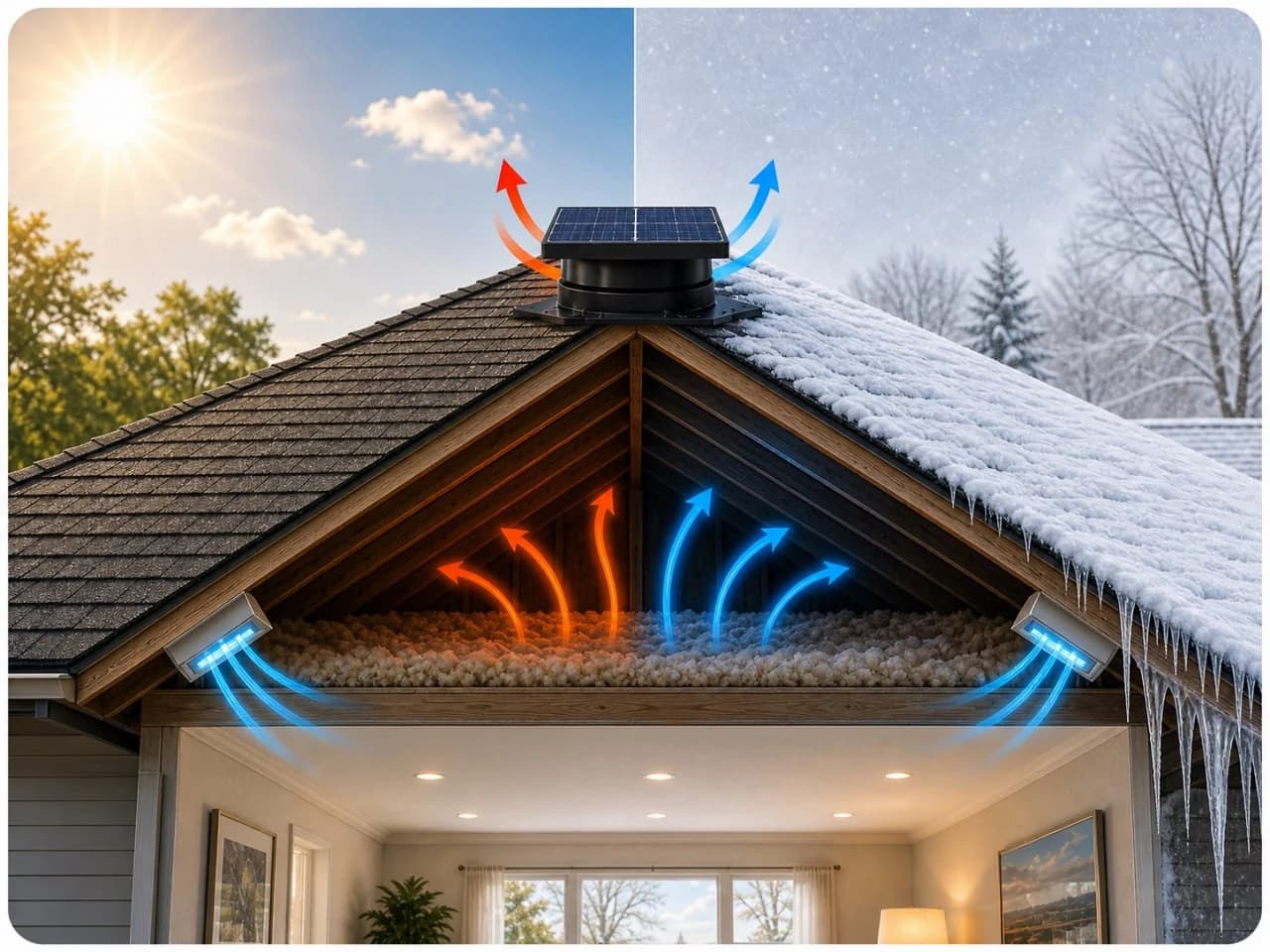
A solar attic fan does both jobs on one piece of equipment. In July it moves the trapped 131°F air out and cools the deck dramatically. In February the panel is making power the moment the sun clears the snow, and the fan is pulling moist air out before it freezes on the deck. Sun runs it year-round. No operating cost added to your bill.
What we install
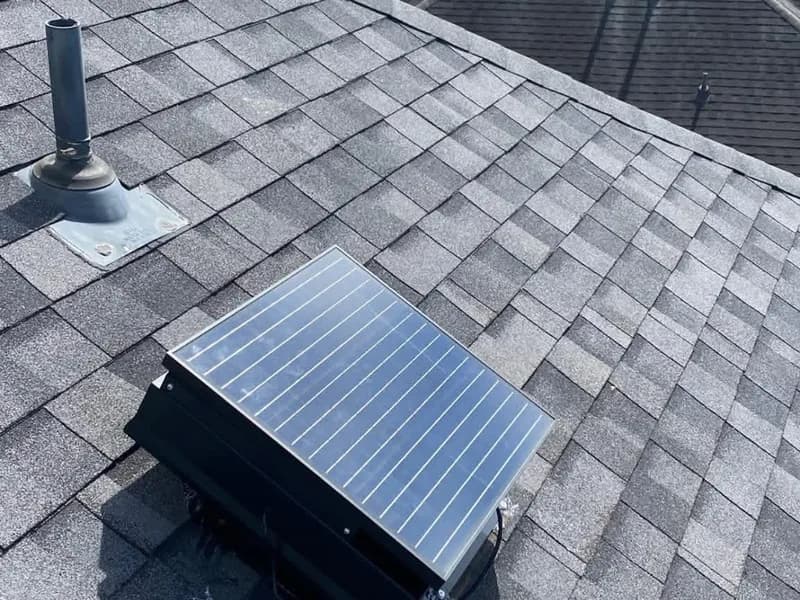
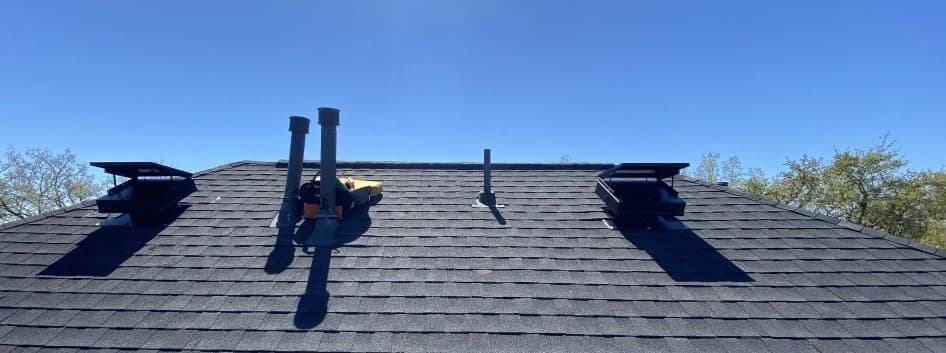
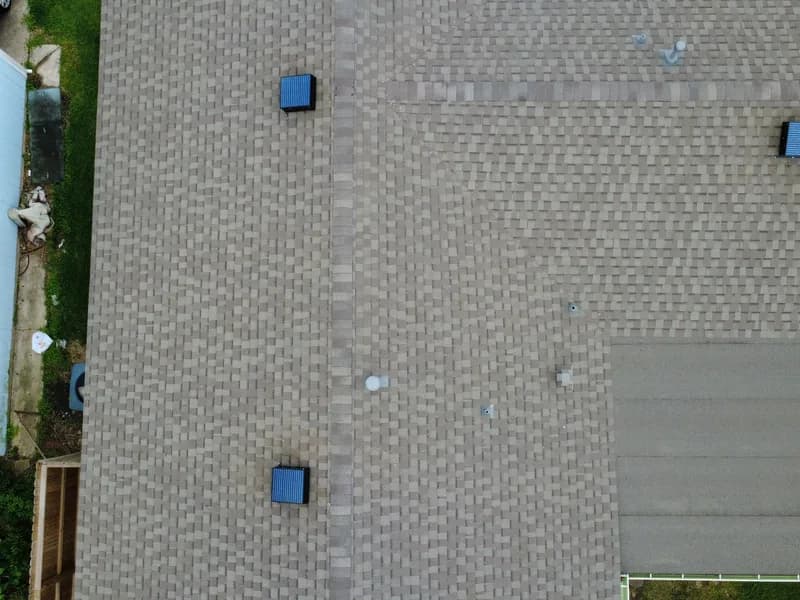
You get one solar attic fan and a Connecticut authorized installer who handles the install. The unit is a 30W solar fan with its own solar panel built into the housing. It mounts on the back slope so it does not show from the road, which keeps you on the right side of Litchfield Hills, New Canaan, and Old Lyme historic-district rules. The installer cuts a clean opening, flashes it for Nor'easter wind-driven rain, runs a thermostat and a humidistat, and finishes the tie-in.
Professional install in a single visit. No electrician. No new circuit. No operating cost added to your bill. The sun runs it.
What you'll save
Summer cooling is the first dollar win, and in Connecticut the numbers actually matter because the electric rate is one of the highest in the country. The average Connecticut home uses about 8,200 kWh per year and a typical CT summer power bill sits around $180 in July. A solar fan trims 8 to 15 percent off summer cooling cost (per U.S. Department of Energy residential cooling-load guidance), which is $14 to $27 a month back from June through August. The bigger summer payoff is comfort: the upstairs bedrooms become sleepable again because the ceiling stops radiating attic heat down into the room.
The other wins stack on top. Shingle life on a deck that is not cooking at 131°F all summer and refreezing all winter extends five to ten years. Ice-dam interior damage in Connecticut commonly runs $4,000 to $11,000 per claim. Mold remediation when wet insulation goes too long runs $3,000 to $8,000. And because your insulation stays dry, your winter heat bill comes down too.
Real Connecticut install scenarios
Westville, New Haven. A 1925 dutch colonial with a gambrel roof and original cedar-converted-to-asphalt deck. The owners had been chasing a ceiling stain in the upstairs hall for three winters in a row, finally figured out it was an ice-dam back-up at the gambrel break, and got tired of paying for spot patches. We mounted the solar fan high on the back slope above the rear addition. By the next March thaw, no stain. The homeowner said her August upstairs felt cooler too, but the win for her was that ceiling staying clean.
Old Greenwich, near the Sound. A 1950s shingle-style cape sitting two blocks from saltwater. Coastal humidity was driving condensation on the rafters year-round and the home inspector had flagged early mold on the north side. Install went on the back slope where the panel could catch the afternoon sun. The mold remediation guy who came back six months later said the attic was the driest he had seen it in his career on that street.
West Hartford, off Farmington Ave. A 1940s brick colonial with finished bonus space over the garage. Bonus room hit 88°F in late July, ice ridges formed on the front eaves every February. Original ridge venting alone was not enough. The solar fan went on the back slope above the bonus room with new soffit work to feed the intake side. Following summer the bonus room held at 78°F, following winter the eaves stayed clear.
Installed by Connecticut authorized installers
Connecticut housing stock skews old. New Haven, Hartford, and the river towns are full of 1900-to-1930 framing under modern shingles. Original venting math was a fraction of what code asks for today. Most original soffits have been painted shut, sealed up by a re-side, or buried under blown-in insulation. Our installers always check the intake side first and will tell you straight if the soffits need work before the fan can do its job.
Greenwich, Westport, Litchfield, Old Lyme, Essex, and most Gold-Coast HOAs have rules about street-facing roof equipment. Back-slope mounting clears almost every one of them. You pick a date, the installer shows up, and the attic stops driving your winter claims.