Why Minnesota attics need this
Minnesota gets both extremes, and the attic feels every one of them. Minneapolis sits at 830 feet on the Mississippi flats. Duluth is at 600. Rochester is at 988. Summer highs run 84°F to 90°F across the southern two thirds of the state, but humidity rolling up from the Gulf turns July afternoons sticky and traps heat under the roof deck. Attic probes in Minneapolis and St. Paul regularly read 120°F to 130°F by 4pm in July, and severe thunderstorms break the heat for an hour before the sun goes right back to cooking the shingles. Tornado-spawning supercells run through the southern third of the state from June through August, which means windows stay shut more days than open.
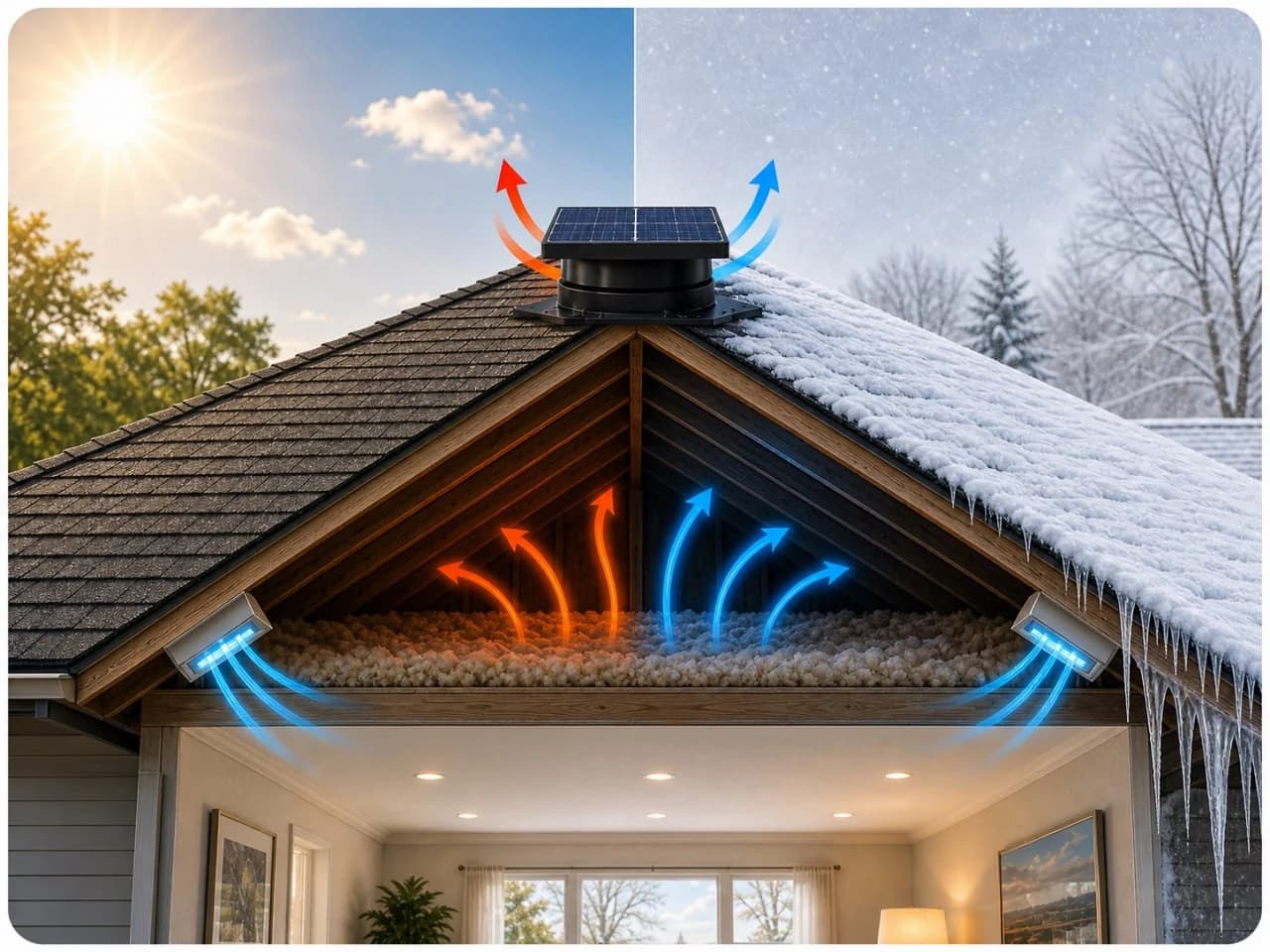
The other Minnesota story is winter. The same attic that hits 130°F in July hits 0°F or below for weeks in January. That annual swing is one of the largest in the country, and asphalt shingles installed in Bloomington or Edina often need replacement at 15 to 18 years instead of 25 because of the flex. The bigger winter problem is moisture. Damp warm attic air condenses on cold sheathing all winter, and the ice damming that results along the eaves is the most common winter repair call in the Twin Cities. The same fan that handles July humidity also vents winter moisture, which is the difference between dry sheathing and rotten sheathing under six months of snow load.
What we install
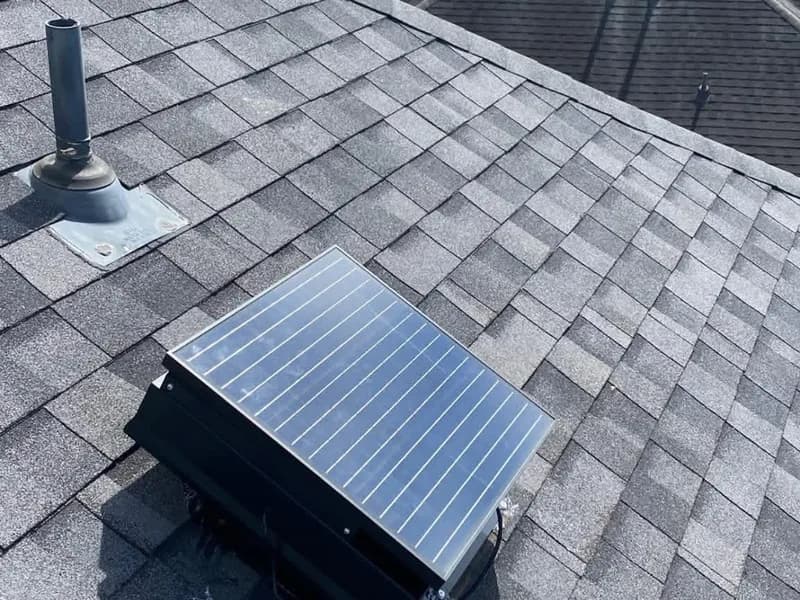
You get one 30W solar attic fan, sized for a Minnesota home, paired with an authorized installer who handles the install. The solar panel is built into the housing. The unit is UV-stabilized and the flashing kit is rated for the kind of wind-driven snow that builds along Twin Cities and Duluth roofs all winter.
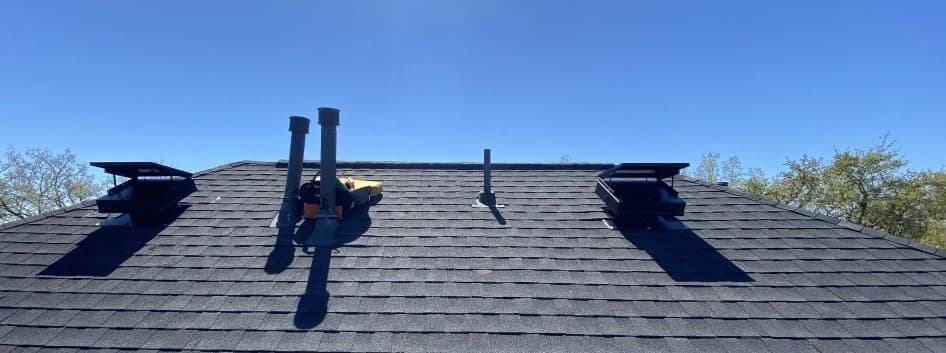
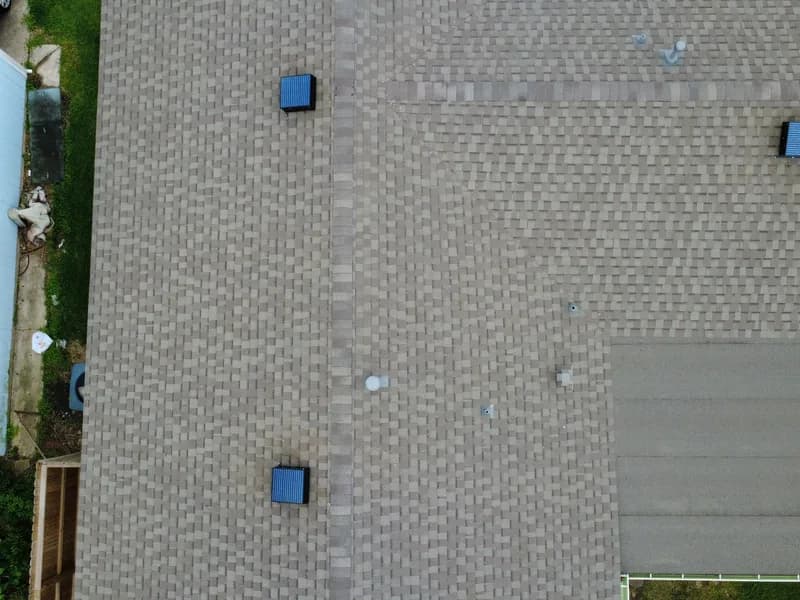
The installer mounts the unit on the back slope so it stays hidden from the street, cuts a clean opening, seals it for Minnesota wind-driven rain and snow, runs a thermostat and a humidistat, and ties off the flashing with extra attention to snow uplift. Professional install in a single visit. No electrician. No new circuit. Sun hits the panel, the fan spins, hot humid attic air moves out in summer and damp warm air moves out in winter.
What you'll save
The average Minnesota home uses about 9,500 kWh per year. A typical summer power bill sits near $160 in July or August. Cooling load runs roughly mid-June through August, and the rest of the year heating dominates.
Owners who put a solar attic fan on a Minnesota home usually see a 10 to 18 percent drop in summer cooling cost (per U.S. Department of Energy residential cooling-load guidance). On a $160 August bill, that is $16 to $29 back. The longer-game payoff in Minnesota is split between two seasons. Asphalt shingles often need replacement at 15 to 18 years because of the seasonal swing. Cool the attic dramatically and you buy years back. The winter story matters even more here. The same fan vents damp attic air through cold months, which is the difference between an ice-free eave and a $4,000 ice dam repair bill in March.
Real Minnesota install scenarios
Minneapolis, Linden Hills. A 1920s stucco home two blocks off Lake Harriet with a steep roof, dark architectural shingles installed in 2013, and full afternoon sun across the lake. The owner kept her thermostat at 74°F but the upstairs front bedroom hit 84°F by 5pm in late July with humidity over 70 percent. We pulled an attic probe reading of 127°F on an 88°F afternoon. The installer set the fan on the back slope so the Linden Hills streetscape stayed clean. Two weeks later the probe was reading 102°F at the same hour. The owner called us in March to say her ice dam line was noticeably smaller than the previous winter.
Saint Paul, Highland Park. A 1940s brick tudor on the south side of Highland Park near the river with original wood trim, dark composite shingles installed about 11 years ago, and brutal afternoon western sun across the Mississippi bluff. The attic was trapping 125°F by 4pm in early August. We mounted the solar fan on the back slope above the garage. The owner reported his August bill dropped from $182 to $144 and the upstairs game room became usable in the afternoon for the first time in three summers. The same owner reported less attic condensation by the following February.
Duluth, hillside Victorian. A 1890s Victorian on the Duluth hillside above Canal Park with a steep roof, dark architectural shingles installed in 2012, and full southern exposure straight down the Lake Superior basin. The attic was reading 118°F on the install crew's probe in mid-July (cooler than the Twin Cities because of the lake) but the winter ice damming history was severe on this exact house. We placed the solar fan high on the back slope below the ridge so it works year-round. The owner texted us in late August: the upstairs bedrooms dropped from 79°F at 7pm to 72°F at 7pm. He called us back in early March to say his eave was clean for the first winter he could remember.
Installed by Minnesota authorized installers
Minnesota building stock leans on 1920s stucco and brick homes in Linden Hills, Highland Park, and St. Anthony Park, 1940s tudors and capes across south Minneapolis and St. Paul, 1980s splits and ramblers in Bloomington, Maple Grove, and Eagan, and lakeshore Victorians around Duluth, Stillwater, and the Brainerd lakes. Most older Twin Cities homes have minimal soffit ventilation by modern standards and a history of ice damming. Most newer suburban subdivisions have light HOA rules about visible equipment. Our installers default to back-slope placement so the unit stays invisible from the street and handles both July humidity and February ice damming. You pick a date, the installer shows up, and your attic stops cooking in summer and stops sweating in winter.