Why Louisiana attics need this
In Louisiana, the heat is only half the problem. Outside in July it might be 92°F in Baton Rouge or 94°F in Shreveport, but the air coming off the Gulf is loaded with moisture. That wet warm air pushes up through your soffits and parks in your attic. Probe readings under shingles in New Orleans and Lafayette routinely hit 140°F by early afternoon, and the relative humidity up there can sit above 80 percent for weeks at a time.
Heat that high radiates straight down through your ceiling drywall into your bedrooms, your kitchen, and your living room. Humidity that high condenses on the cold side of your AC ducts and starts feeding mildew on the joists. In Louisiana you are not only fighting a power bill, you are fighting mold and slow plywood rot at the same time. Your AC runs hard from April through October trying to keep up, and the attic above it is the reason it cannot win.
What we install
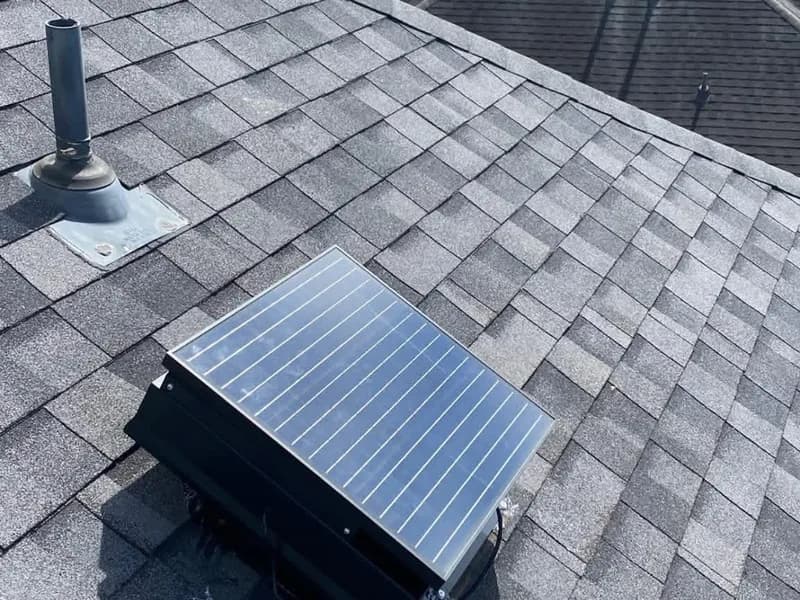
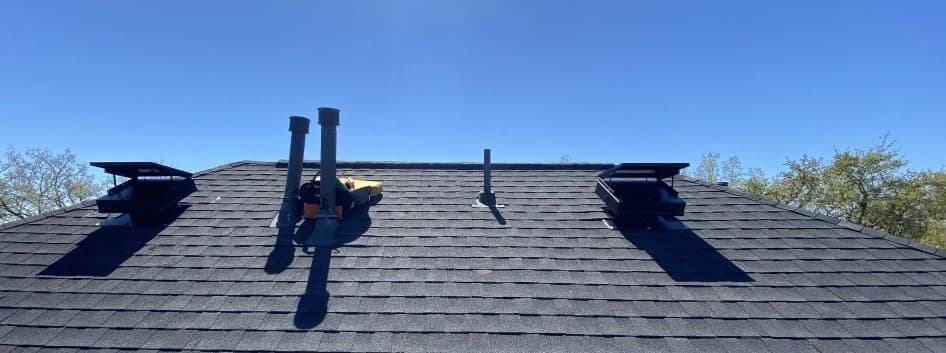
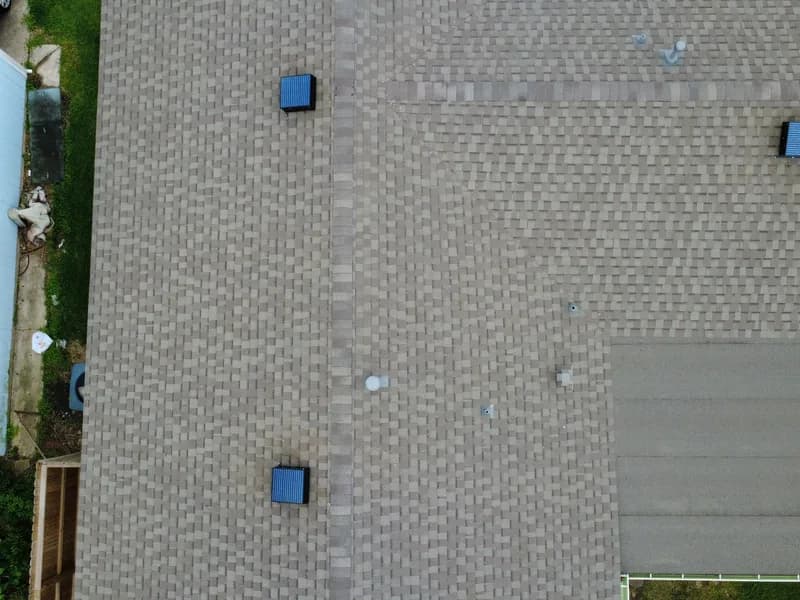
You get one solar attic fan, sized for a typical Louisiana home, paired with an authorized installer who does the install. The unit is a 30W solar attic fan with its own solar panel built into the housing. It mounts on the back slope of your roof so it does not show from the curb. The installer cuts a clean opening, seals it for wind-driven rain, runs a thermostat and a humidistat, and ties off the mounting hardware.
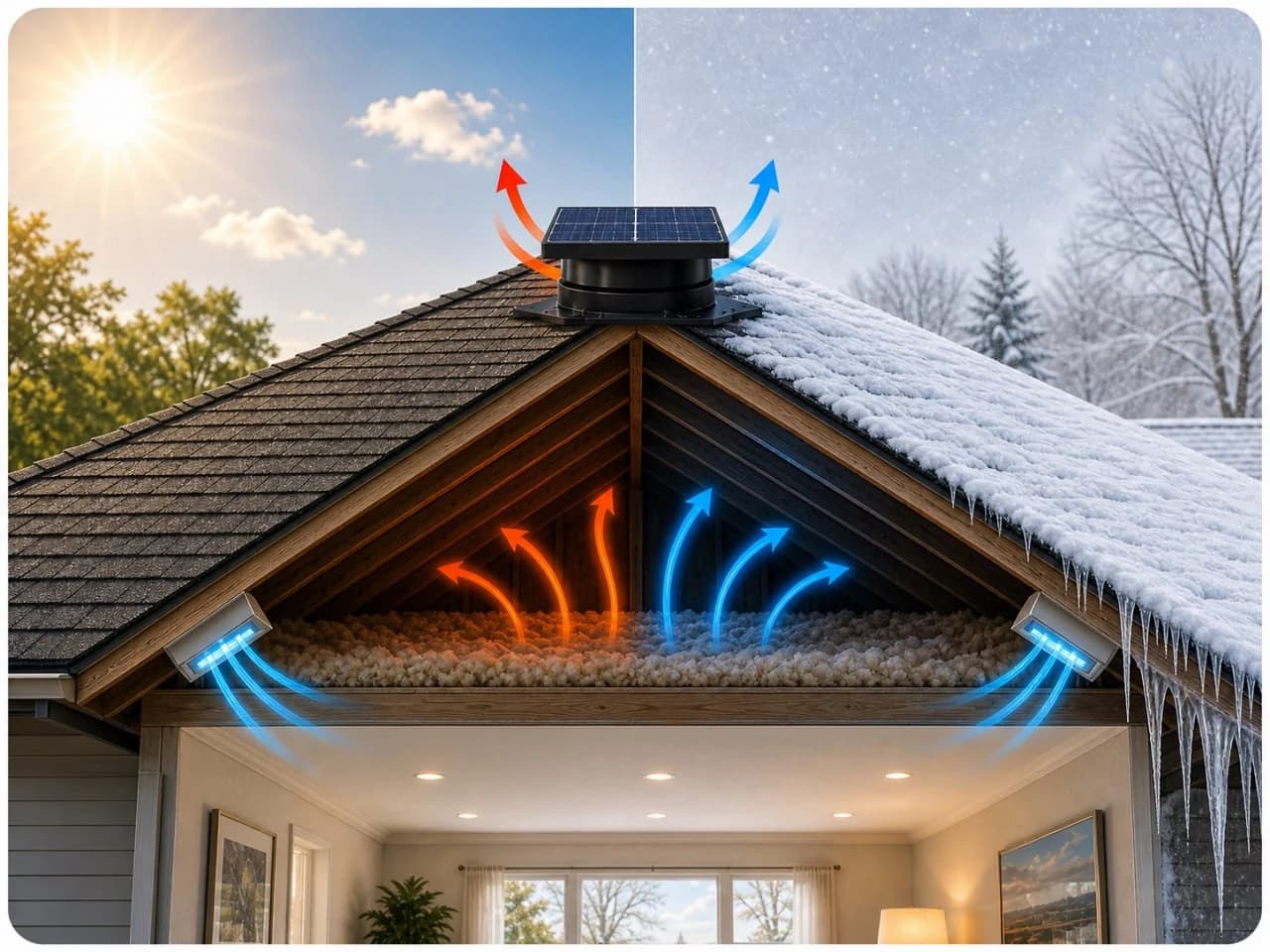
Professional install in a single visit. No electrician. No new circuit. No operating cost added to your bill. Sun hits the panel, the fan spins, and a lot of trapped attic air gets pushed out. When a thunderstorm rolls in off the Gulf, the fan rests. When the sun comes back out an hour later, it goes right back to work.
What you'll save
The average Louisiana home uses about 14,100 kWh per year, well above the national average, because AC carries the load eight months out of the year. A typical Louisiana summer power bill sits near $295 in July or August, and a big chunk of that is your AC fighting a hot wet attic.
Owners who install a solar attic fan in Louisiana usually see a 15 to 25 percent drop in summer cooling cost (per U.S. Department of Energy residential cooling-load guidance). On a $295 August bill, that is $44 to $73 back in your pocket that month. Louisiana also has the humidistat advantage. The fan pulls moisture as well as heat, which means your AC stops working as hard to dehumidify the upstairs. Across a full cooling season the fan pays for itself well before its warranty runs out, and your shingles last longer because they stop cooking from underneath.
Real Louisiana install scenarios
Lakeview, New Orleans. A raised 1950s cottage with original soffit vents and a low-slope hip roof. The owner had her thermostat set at 76°F but the back of the house never got below 83°F by mid-afternoon, and the upstairs closets smelled musty year-round. We mounted the fan on the rear slope, added a humidistat, and within a week the attic had dropped from 141°F to 110°F. The musty closet smell was gone by the end of month one.
Garden District, also in New Orleans. A two-story Victorian with composite shingles laid over original cedar decking, vented only through a couple of gable louvers. Attic air was barely moving even with both gable vents open. The installer placed the solar fan high on the back slope to take advantage of the steep pitch and the long afternoon sun window. The owner reported his July bill dropped from $338 to $264 the first full month it ran.
South Baton Rouge, near LSU. A 1980s brick ranch in the Southdowns area with dark architectural shingles and serious west-side exposure. Attic probe in late June read 144°F. The upstairs office sat directly under the worst of it and the homeowner had stopped using the room. After install, the office tracked within 2°F of the rest of the house by August. The AC also started cycling off in the afternoon for the first time the owner could remember.
Installed by Louisiana authorized installers
Louisiana installers know wind-driven rain. After Hurricane Katrina and Ida, building practices in southern parishes tightened up around roof penetrations, and our installers default to the same wind-rated mounting hardware used on full roof replacements. Older homes in New Orleans, the Garden District, and along the river road often have original cedar or board decking under the shingles, and the installer adjusts the cut and seal for that. Newer subdivisions outside Lafayette and Baton Rouge sometimes have HOA placement rules, and back-slope mounting clears almost all of them.
You pick a date, the installer shows up, and your attic stops cooking.