Why Ventilate
Why Attic Ventilation Matters.
Your attic sits between the sun and the rest of your house. When hot air gets stuck up there, it pushes down through the ceiling, heats every room, and forces your AC to run harder. This guide walks you through why attics overheat, the warning signs to look for, how attic airflow actually works, and how a solar attic fan rescues your roof and your cooling bill.
The short version
Your attic is a heat buffer.
Think of your attic as the buffer between the sun and your living room. On a 95°F afternoon, your asphalt shingles can hit 160°F. The air just under those shingles can climb to 130°F, 140°F, sometimes 150°F. That heat does not stay in the attic. It pushes down through the drywall ceiling all afternoon and all night, and the only thing slowing it down is a thin blanket of insulation.
Your AC fights the attic every minute of the cooling season. The Department of Energy estimates a poorly vented attic can add 10 to 25 percent to a summer cooling bill. On a $280 bill, that is up to $70 every month you could have kept. Trapped heat costs you on the roof side too. Shingles cook from underneath, plywood decks dry out and crack, and in humid states the wet attic air rots the wood from the inside.
Good attic ventilation fixes both problems at once. It pulls the hot air out, lets cooler outside air in, and gives the rest of your home a fighting chance. The five lessons below cover the full picture: how attics overheat, the warning signs, how airflow actually works, where a solar fan fits, and the myths homeowners hear from neighbors.
Inside our installs
Real fans, real roofs
Every photo on this page is one of our installs. Different roofs, different states, same fan.
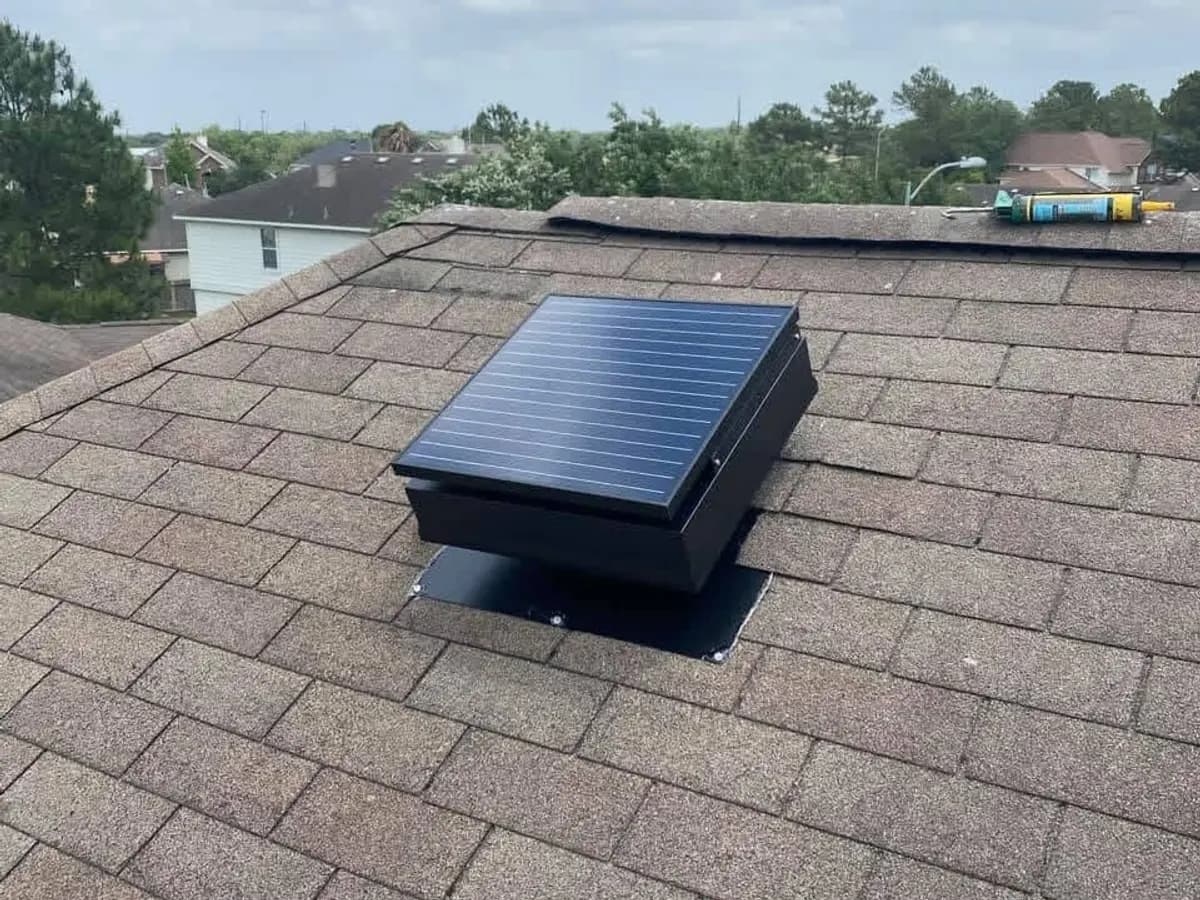
On the roof 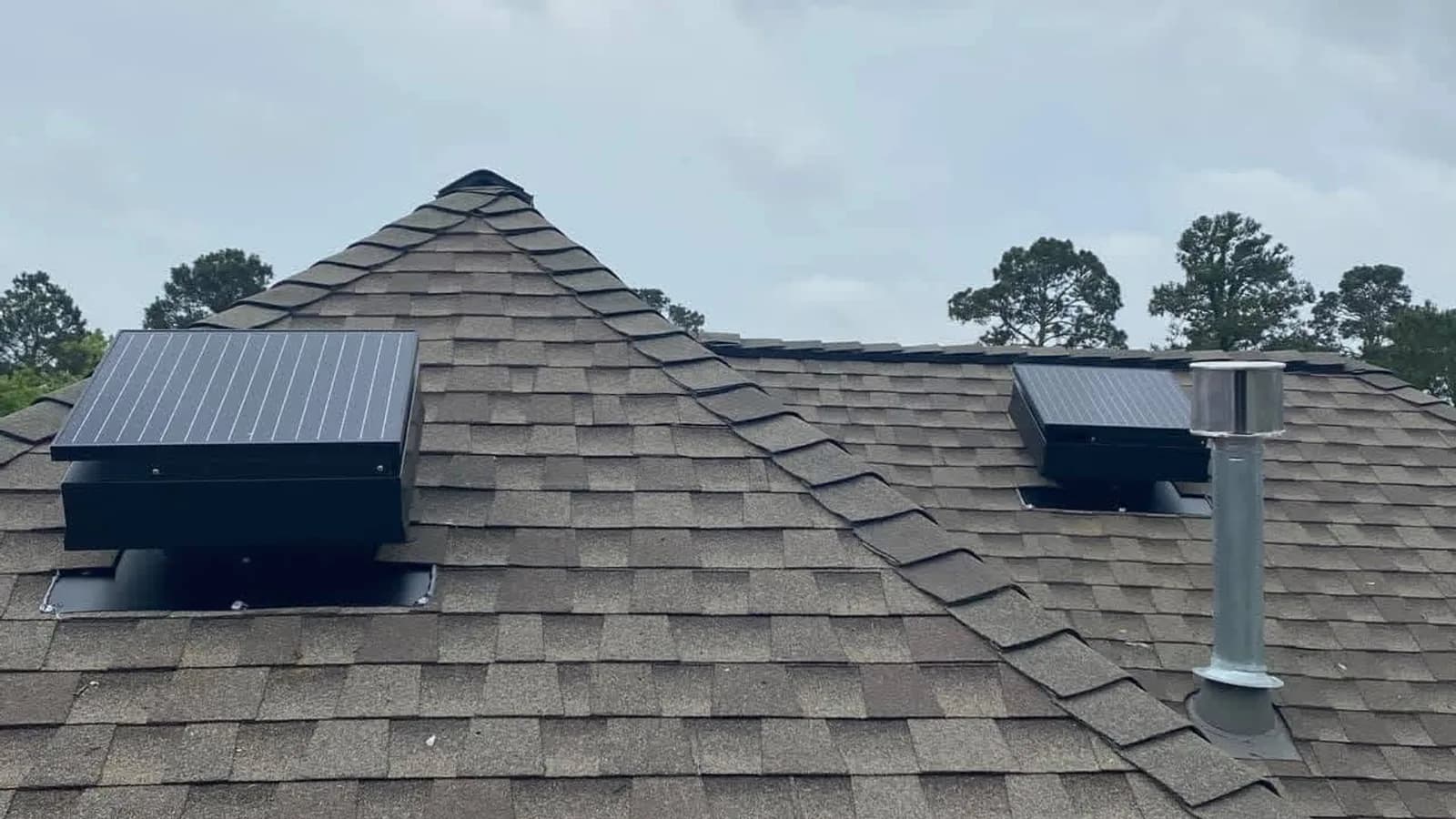
Two fans, one ridge 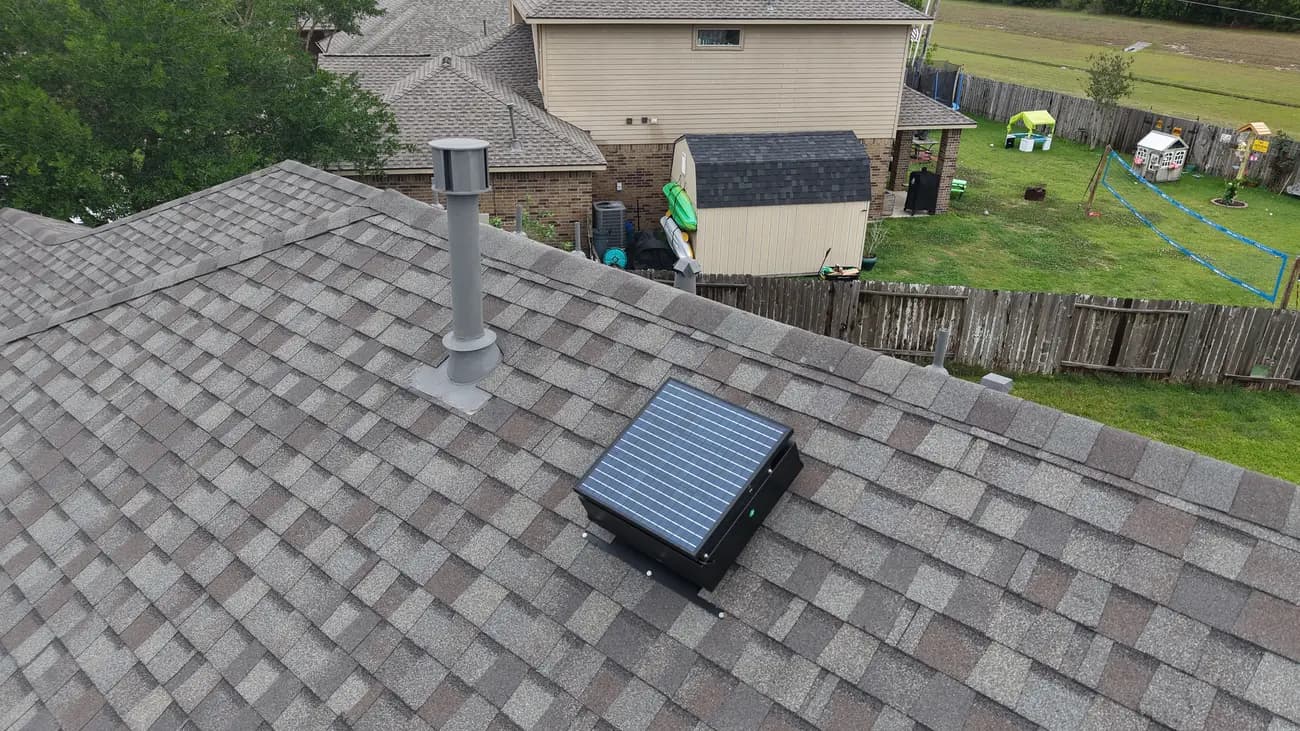
From above
The hidden story above your ceiling
Why attic ventilation matters more than you think.
Your attic is constantly battling heat, moisture, and trapped air. When ventilation fails, problems begin silently, long before you ever see a sign.
Common issues homeowners don't realize start in the attic
- Skyrocketing electric bills
- A/C running nonstop
- Rooms that never stay cool
- Humidity and musty odors
- Mold growth and insulation deterioration
- Roof and shingle damage
Why a solar attic fan
Eight ways a solar attic fan pays off.
Solar attic fans turn passive ventilation into an active system that protects your roof, your bills, and the air inside your home.
01
Extended roof and AC system lifespan
Pulling extreme heat out of the attic minimizes the thermal stress on roofing materials and your air conditioning system, helping both last longer.
02
Moisture and mold reduction
A solar attic fan reduces moisture buildup, a key factor in preventing mold and mildew growth so your home stays healthier.
03
More frequent air exchanges
The fan keeps a steady column of fresh air moving through the attic, which is crucial for maintaining a comfortable indoor environment below.
04
No operating cost
Powered entirely by the sun. No new circuit, no electrician, and no monthly cost added to your power bill.
05
30% federal tax credit eligibility
Solar fans qualify for the 30% federal residential clean-energy tax credit, which makes the install meaningfully less expensive at tax time.
06
Durable construction
Built with aluminum components and stainless steel fasteners, the unit is engineered to handle hail, wind, and decades of weather without complaint.
07
Year-round temperature regulation
In summer the fan lowers attic temperatures, easing the load on your HVAC. In winter it prevents condensation on roof beams and rafters that leads to mildew, wood rot, and rusting fasteners.
08
Protection for everything in the attic
Regulating attic temperatures protects stored items and structural elements: shingles, roof boards, siding, and insulation all hold up longer when the attic is not cooking them.
Our 30W solar attic fan is a simple yet effective solution for hot, under-ventilated attics. The result is a more comfortable, healthier, more efficient home.
Before vs after
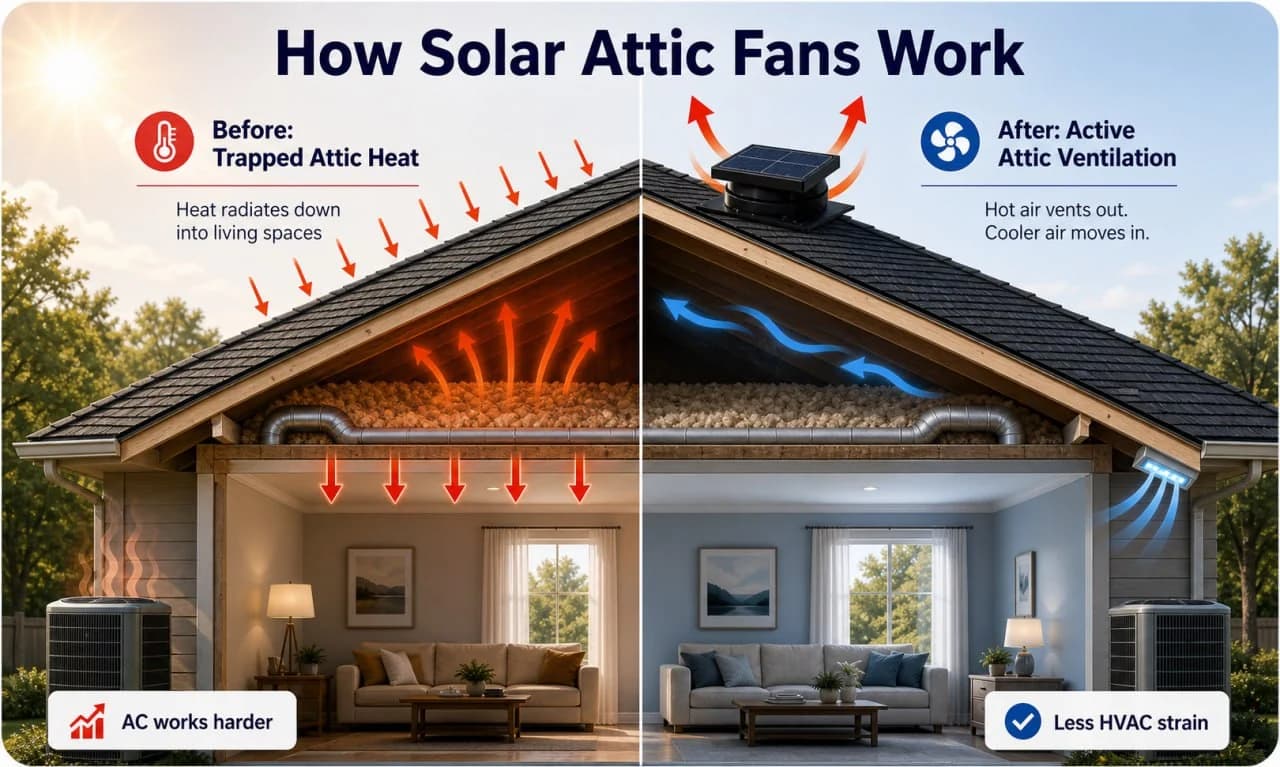
The same house, with and without a solar fan.
Same roof, same insulation, same AC. What changes is the air. Without a fan, hot attic air sits and pushes back into the rooms below. With a fan, the hot air leaves before it has a chance to soak the ceiling.
Five short lessons
Read in order, or jump to whichever piece is most relevant to your home.
Lesson 1
Why your attic gets so hot
Roof color, shingle material, deck angle, and sun load. The four levers behind a 130°F attic.
Lesson 2
Signs of poor ventilation
Hot upstairs rooms, runaway power bills, stained roof decks. The clues to look for from the ground.
Lesson 3
How ventilation works
Intake, exhaust, balance, airflow. The plain-English version of the chimney effect on your roof.
Lesson 4
How solar fans help
Where an active fan changes the math, where it does not, and what you feel after install.
Lesson 5
Myths and facts
Six things homeowners hear from neighbors and contractors. The truth from the roof.
Straight talk
Common myths homeowners hear
Most of what people get told about attic ventilation comes from a friend, a forum, or a sales rep with something to push. Here is what the building science actually says.
Myth
“My roof already has soffit vents and a ridge vent, so I am set.”
Truth
Passive vents only move air when wind hits them at the right angle. On a still 100°F afternoon, they do almost nothing. A powered solar fan pulls a steady column of air whether or not there is wind, and it uses your existing soffit vents as fresh-air intakes.
Myth
“An attic fan will suck conditioned air out of my house and run up my AC bill.”
Truth
That myth comes from old hardwired attic fans installed in homes with a leaky attic floor. A correctly sized solar fan pulls from a properly vented attic, not from the conditioned space below. If anything, your AC runs less because the ceiling above each room is no longer radiating heat.
Myth
“Solar fans do not work on cloudy days or at night when the attic is still hot.”
Truth
The attic gets hottest between roughly 11 AM and 6 PM, when the sun is on the roof and the solar panel is making its full output. That is exactly when you need the fan running. By sundown, the hot air the fan removed all afternoon is already out of the house.
Myth
“If my AC keeps the house cool, my attic must be fine.”
Truth
Your AC is fighting the attic, not measuring it. A 130 to 150°F attic still pushes heat into the rooms below. Your AC compensates by running longer and harder, which is why your power bill keeps climbing and your upstairs runs hotter than your downstairs.
Myth
“Powered fans use more electricity than they save.”
Truth
Our fan does not draw from your panel at all. The 30W solar panel on top is its only power source. The savings on AC runtime are pure return. Most owners see their summer bill drop within the first full month after install.
Myth
“I only need this if I live somewhere extreme like Phoenix or Houston.”
Truth
Anywhere you get long stretches of 85°F or higher, your attic is hitting 130°F+. The math is the same in Tampa, Atlanta, Charlotte, or Las Vegas. We install nationwide because the cooling season is long enough across most of the country for the fan to pay back fast.
Lifetime Warranty
One-Visit Install
Smart Temp + Humidity Sensing
Hail + Wind Resistant
Installed Nationwide
Ready for a cooler attic?
Pick your state, pick your fan, and your authorized installer takes it from there. Your attic stops cooking by next month.