Why Hawaii attics need this
Hawaii does not have seasons the way the mainland does. The attic problem runs every month. Honolulu and Pearl City average summer highs sit around 85°F, but the sun is almost directly overhead from May through September and trade-wind humidity stays in the 65 to 75 percent range all year. Under dark asphalt shingles, attic probes routinely read 130°F to 140°F by mid-afternoon, and the heat does not get a winter break. That heat radiates straight down through the ceiling into bedrooms and living rooms, and your AC, if you have one, runs nearly every day of the year. Hawaii has the highest electricity rates in the United States, so every kilowatt the AC burns to fight a roasting attic shows up on the bill.
The other Hawaii twist is moisture. Trade-wind humidity pushes warm wet air into the attic through every soffit and gable opening. On the windward side of Oahu, Maui, and the Big Island, that humid air meets cooler ducts and condenses, feeding mildew on the joists and rusting metal fasteners from the inside out. Within five miles of any coast, salt air eats cheap hardware in a single season. Kaneohe and Hilo attics see this faster than anywhere else.
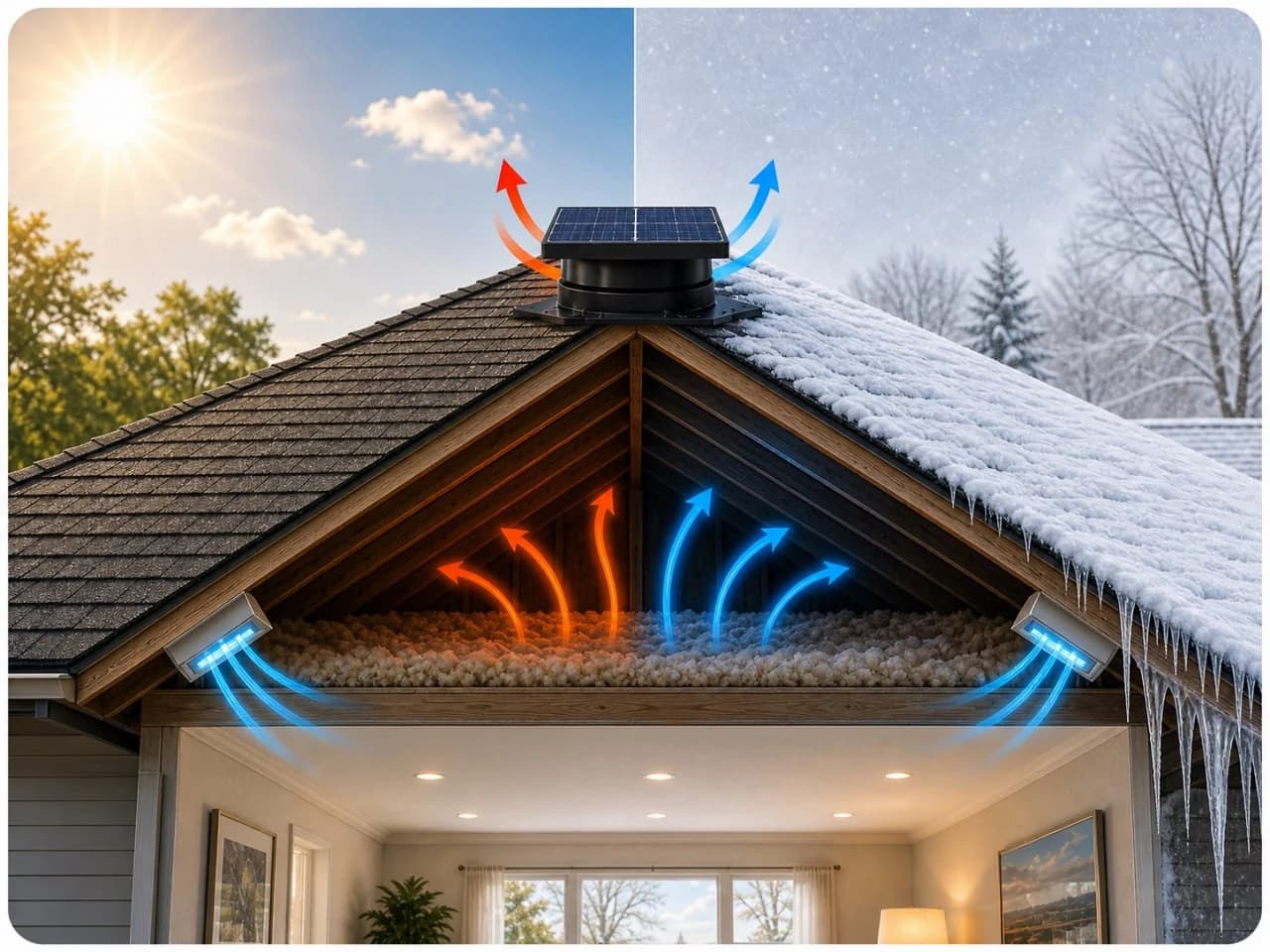
A solar attic fan handles both jobs on one piece of equipment. It pulls hot air out so the deck does not radiate into the bedrooms, and it pulls humid air out before it can condense and feed rot.
What we install
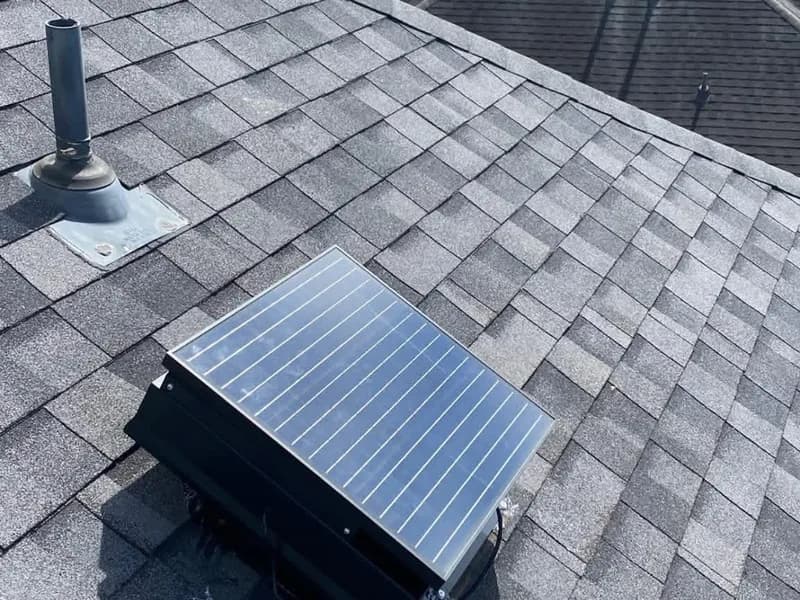
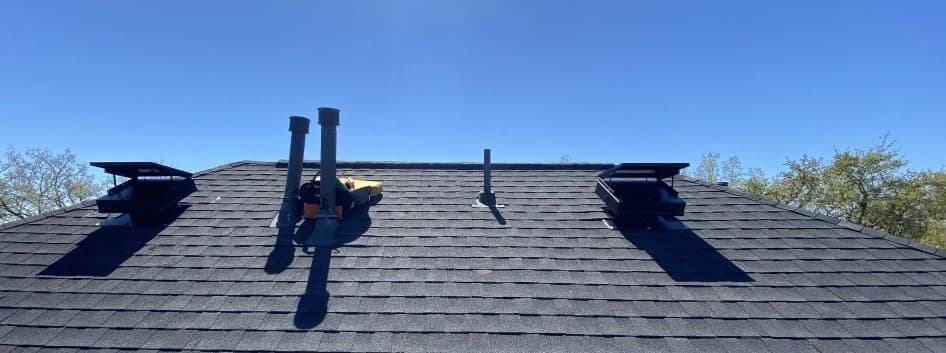
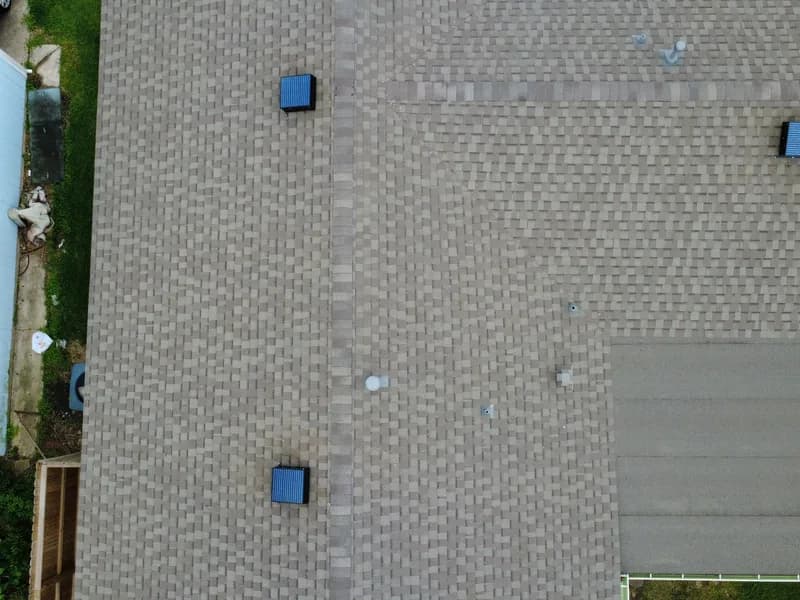
One 30W solar attic fan with the panel built into the housing, with corrosion-resistant aluminum construction that lives well in salt air. The installer mounts it on the back slope where it stays hidden from the street, cuts a clean opening, seals it for windward-side wind-driven rain, runs a thermostat and a humidistat, and ties it off with stainless hardware. Professional install in a single visit. No electrician, no new circuit, no operating cost added to your bill.
What you'll save
The average Hawaii home uses about 6,300 kWh per year, lower than mainland averages because homes are smaller and there is no heating load, but the per-kWh price is the highest in the country. A typical summer power bill in Honolulu or Kailua sits near $250. Owners who install a solar attic fan in Hawaii usually see a 15 to 25 percent drop in cooling cost (per U.S. Department of Energy residential cooling-load guidance), which on a $250 bill is $37 to $62 back every month, year-round, because cooling load never stops here. Hawaii homeowners also qualify for the 30 percent federal Residential Clean Energy Credit and the state's Renewable Energy Technologies Income Tax Credit.
Installed by Hawaii authorized installers
Oahu building stock leans on single-wall plantation homes in older Honolulu neighborhoods, 1960s to 1980s ranches across Pearl City and Mililani, and newer subdivisions in Ewa Beach and Kapolei. Maui and the Big Island add more steep-roof construction in upcountry areas. Most older homes have minimal soffit ventilation by modern standards. Back-slope mounting keeps the unit invisible from the street and clears Hawaiiana Management and Association of Apartment Owners rules on visible roof equipment. You pick a date, the installer shows up, and your attic stops cooking year-round.