Why Nova Scotia attics need this
Nova Scotia gets more summer sun than most of Atlantic Canada, and the attic notices. Halifax and Dartmouth average July highs around 23°C (73°F), but under dark asphalt shingles attic probes routinely read 48°C to 52°C (118°F to 125°F) by mid-afternoon. Atlantic humidity hangs the warm air in place. Most homes here were not built with AC, so the upstairs sits 5°C to 8°C hotter than the main floor through July and August evenings.
Winter and shoulder seasons bring the moisture fight. Post-tropical storms and Nor'easters drive wind and rain into attic vents from August through April. Indoor humidity from showers and cooking pushes up into the attic and meets cold sheathing, condensing for months. Hurricane Fiona in 2022 reminded the entire province what wind-driven rain can do to a vent kit that was not flashed properly. The Cape Breton coast and the South Shore see salt-air corrosion on every metal fastener that is not stainless or aluminum.
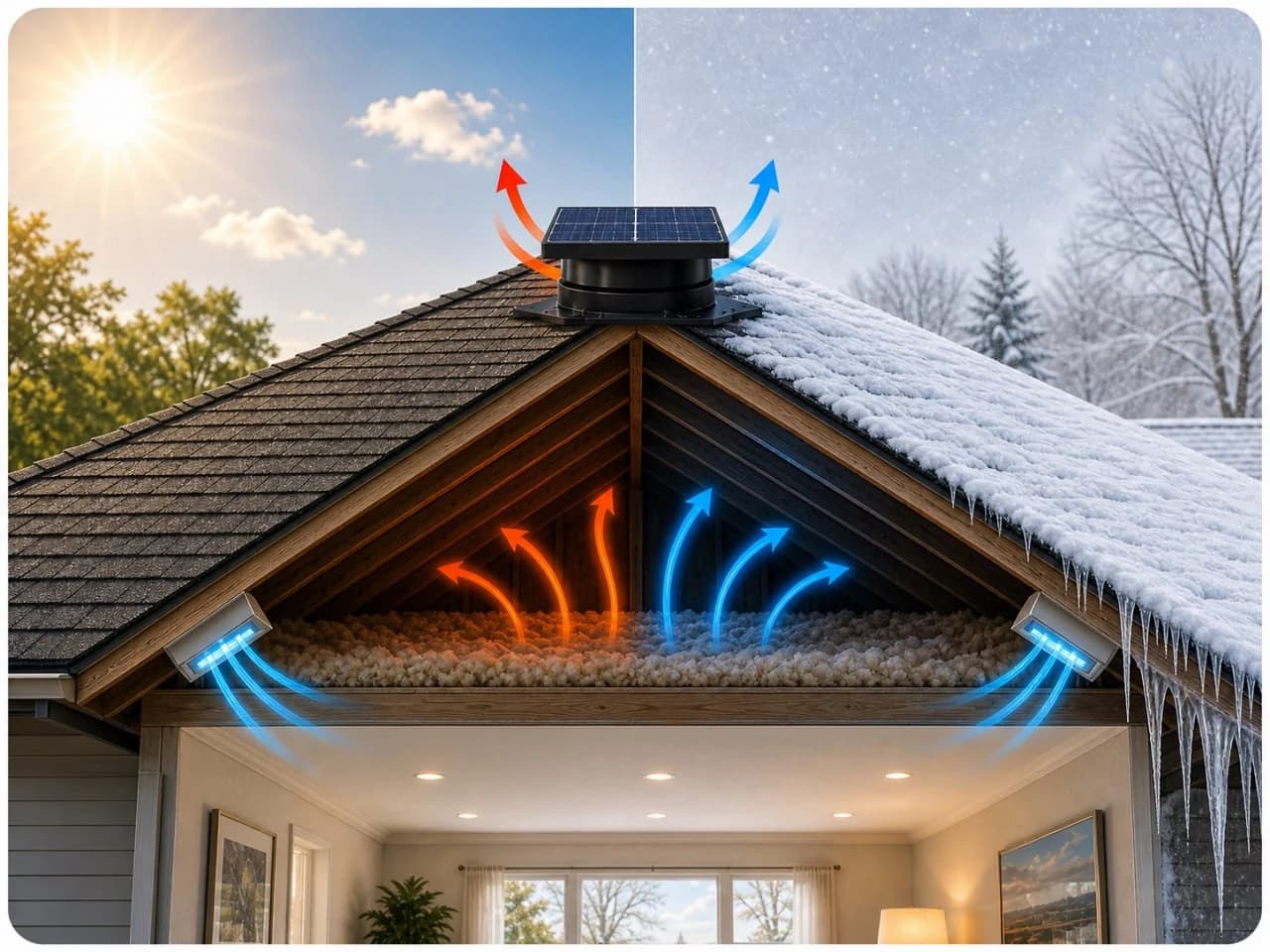
A solar attic fan handles both jobs. It moves trapped summer heat out and pulls humid air out before it can rot the deck.
What we install
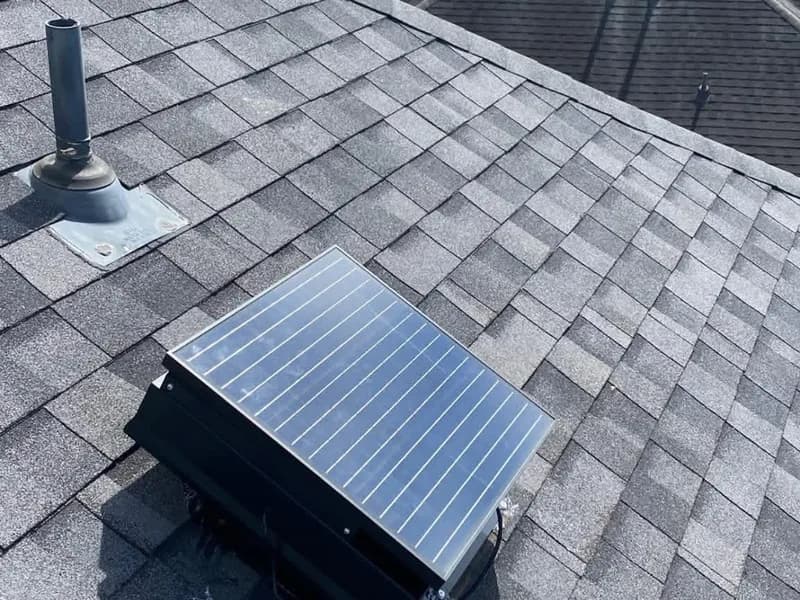
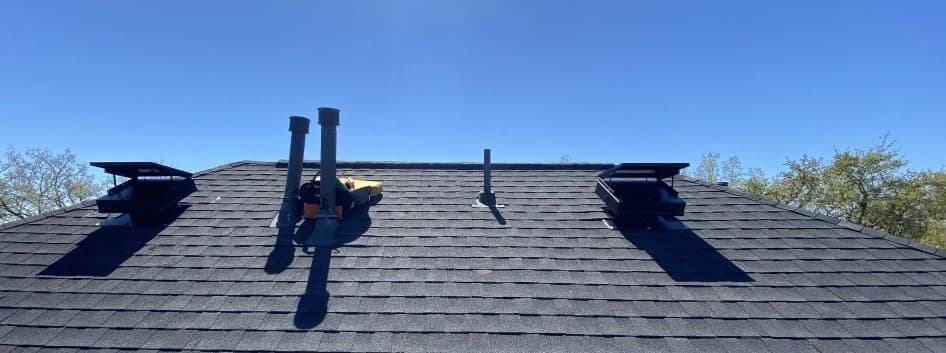
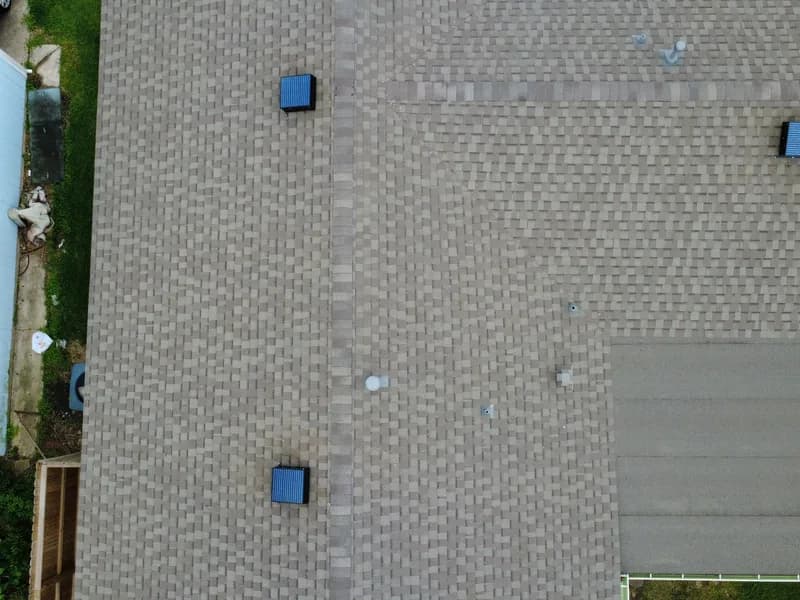
One 30W solar attic fan with corrosion-resistant aluminum housing built for salt air, mounted on the back slope where it does not show from the street. The installer cuts a clean opening, flashes it for Nor'easter and hurricane wind-driven rain, runs a humidistat, and ties it off with stainless hardware. Professional install in a single visit. No electrician, no new circuit, no operating cost added to your bill.
What you'll save
The average Nova Scotia home uses about 11,000 kWh per year, with electric and oil heat splitting most homes. A typical summer power bill in Halifax sits near $130 in July. Owners who install a solar attic fan usually see an 8 to 15 percent drop in summer cooling cost (per U.S. Department of Energy residential cooling-load guidance). The bigger long-game payoff is avoided mold and rot. Halifax-area mold remediation runs $4,000 to $10,000 per attic.
The 30 percent U.S. federal Residential Clean Energy Credit does not apply in Canada. Check Efficiency Nova Scotia's Home Energy Assessment and HomeWarming programs for current ventilation and insulation rebates.
Installed by Nova Scotia authorized installers
Halifax building stock spans 1800s wooden homes in the South End and Schmidtville, postwar bungalows across Dartmouth and Spryfield, and newer builds in Bedford and Clayton Park. Truro and New Glasgow add small-town heritage stock. Halifax heritage rules in the downtown core and the South End restrict street-facing roof equipment, and back-slope mounting clears them. You pick a date, the installer shows up, and your attic stops baking in summer and stops sweating in winter.