Why Maine attics need this
People hear "Maine" and assume the attic problem is winter. Summer is the bigger surprise. The state's average July high sits around 78°F, but the attic does not care about the outside number. Under dark shingles in direct afternoon sun, even an 80°F day pushes the attic deck to 125°F or 130°F. We have pulled probe readings of 128°F in Portland and Bangor attics on plain ordinary July afternoons. That heat radiates straight down through your ceiling drywall into the upstairs bedrooms all evening long. Your AC, if you have one, fights it. The bedrooms stay 8°F to 12°F hotter than the thermostat says they should be. Insulation slows that heat down. It does not stop it.
The winter story is the other half of the Maine pitch. From November through April, your attic fights moisture from two directions. Indoor humidity from showers, cooking, woodstoves, and just breathing rises up through the ceiling and condenses or freezes on the cold underside of the roof deck. Snowpack on the shingles melts from below when attic air gets warm, runs down to the freezing eaves, refreezes into a ridge of ice, and pushes the next round of meltwater up under the shingles into your ceiling. That is the ice dam, and Maine insurance adjusters from Kittery to Caribou write this claim up by the thousand every winter.
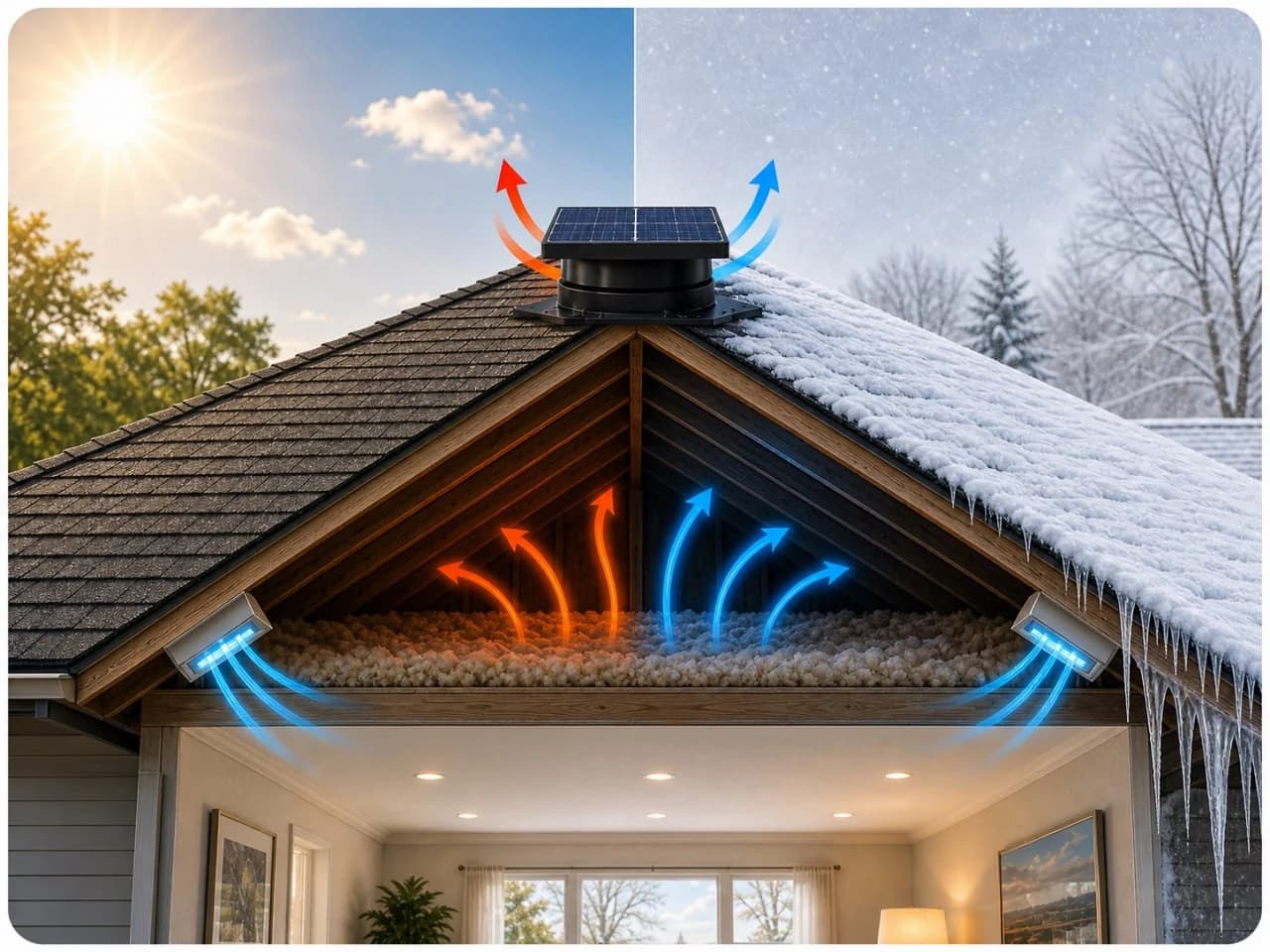
A solar attic fan does both jobs on one piece of equipment. In July it moves the trapped 130°F air out and cools the deck dramatically. In February the panel is making power the moment the sun clears the snow, and the fan is pulling moist air out before it can freeze on the deck. Sun runs it year-round. No operating cost added to your bill.
What we install
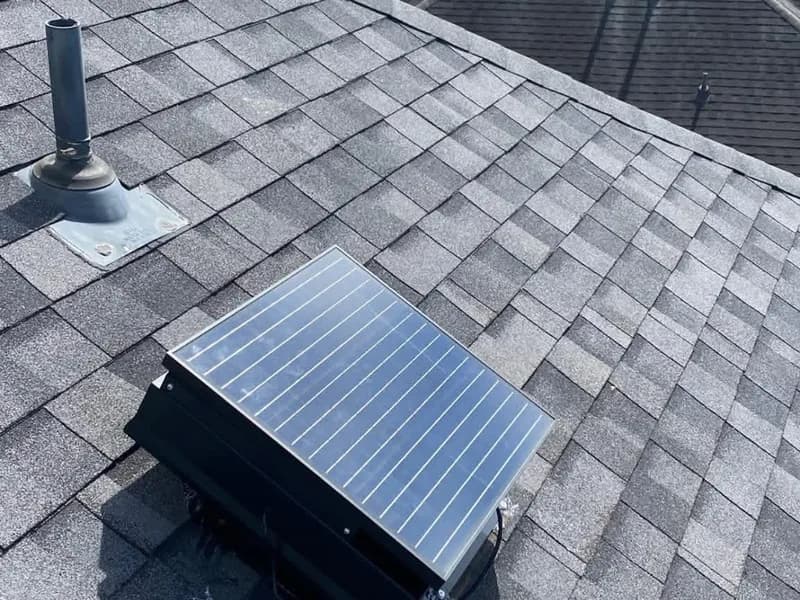
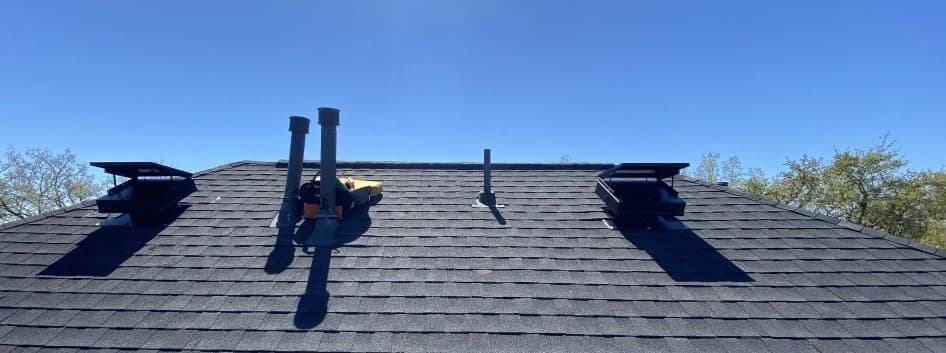
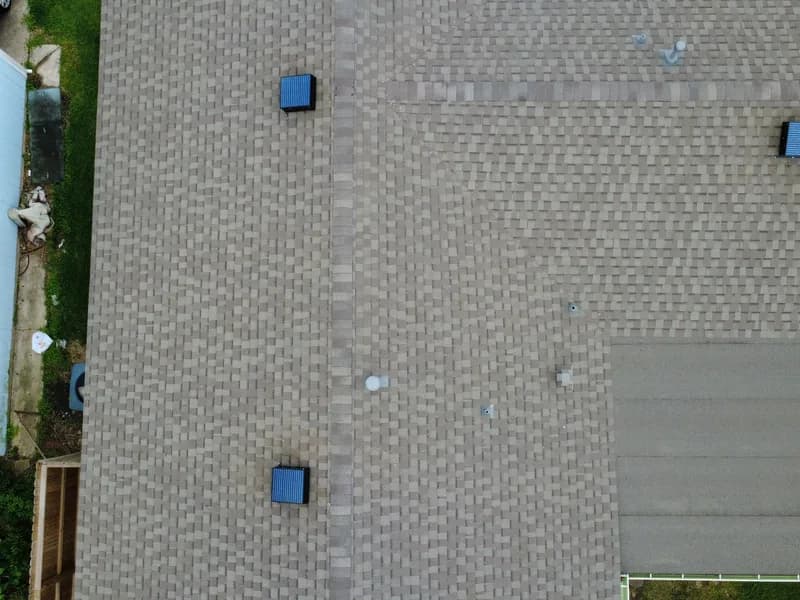
You get one solar attic fan and a Maine authorized installer who handles the install. The unit is a 30W solar fan with the panel built into the housing. It mounts on the back slope of the roof so it does not show from the street, which matters in Portland Old Port, the Brunswick captain's-home district, and almost every coastal village historic-district rule. The installer cuts a clean opening, flashes it hard for Nor'easter wind-driven rain and meltwater backup, runs a thermostat and a humidistat, and ties it off.
Professional install in a single visit. No electrician. No new circuit. No operating cost added to your bill. The sun runs it.
What you'll save
Summer cooling is the first dollar win. The average Maine home uses about 6,800 kWh per year, low because most homes heat with oil, propane, or wood, and a typical Maine summer power bill sits around $130 in July. A solar fan trims 8 to 15 percent off summer cooling cost (per U.S. Department of Energy residential cooling-load guidance), which is $10 to $20 a month back from June through August. Just as important, the upstairs bedrooms actually become sleepable, because the ceiling above them stops radiating attic heat down into the room every evening.
Then the rest of it stacks up. Shingle life on a deck that is not cooking at 130°F all summer and refreezing all winter extends five to ten years. Ice-dam interior damage runs $4,000 to $12,000 per claim in Maine, and a lot of homes get hit more than once a winter. Mold remediation when wet insulation goes too long runs $3,000 to $8,000. And because your insulation stays dry, your heating fuel bill drops too. For a Maine home burning $3,000 a season in oil, that is real money.
Real Maine install scenarios
Munjoy Hill, Portland. A 1895 three-story Italianate two blocks from the Eastern Prom. The owners had been mopping up around the third-floor light fixtures every February when the ice-dam meltback found its way through the deck. Soffit venting was sealed shut by a vinyl re-side from the early 90s. We mounted the solar fan on the back slope above the rear ell where it stayed out of the harbor view, and the installer cut new soffit vents to feed the intake side. Next winter, no drips. By August the third-floor bedrooms were sleepable for the first time in years.
A 1920s cape in Brunswick, near Bowdoin. A typical New England story-and-a-half with knee-wall storage and a north-facing rear roof that never dried out. The home inspector had flagged dampness on the rear-slope rafters before the family bought the house. Install went on the south-facing back slope to maximize the panel's solar window. Within two months the rafters were dry to the touch. The family ran their portable dehumidifier maybe twice that winter instead of constantly.
Bangor, off Broadway. A 1920s two-story with a steep front gable, original cedar deck under modern asphalt, and chronic ice ridges at the front eaves. The owner had been paying for roof raking after every storm at $250 a visit. We placed the solar fan high on the back slope above the kitchen with a humidistat so it would keep working through wet thaw cycles. Next winter, the ridge did not form. He canceled the roof-raking contract and reported his oil bill came down by about $50 a month, which he attributed to insulation that was finally dry enough to do its job.
Installed by Maine authorized installers
Maine has some of the oldest housing stock in the country, especially in the coastal villages. Portland, Bath, Camden, Bar Harbor, and the river towns are full of 1850-to-1900 framing under modern asphalt. Cedar shake is still common in rural and coastal applications, but most year-round homes are asphalt-shingle now. Original ventilation math was a fraction of what code asks for today. Most original soffits have been painted shut or sealed by a re-side. Our installers will look at the intake side first and tell you straight if the soffits need work before the fan can pull its full weight.
Portland Old Port, Camden, Bar Harbor, Kennebunkport, Wiscasset, and most coastal historic districts have rules about street-facing roof equipment. Back-slope mounting clears almost every one. You pick a date, the installer shows up, and the attic stops staying wet all winter.