Why Missouri attics need this
Missouri summers run hot and sticky from St. Louis to Kansas City and on down through Springfield. Outside it might be 89°F in St. Louis or 91°F in Kansas City, but the air coming up the Mississippi and the Missouri rivers is loaded with moisture. Probe readings under Missouri shingles run between 130°F and 140°F by mid-afternoon in July and August, and the humidity makes that attic feel even worse than the temperature suggests.
Trapped attic heat radiates straight down through your ceiling drywall into the bedrooms and the living room. Trapped attic moisture is just as much of a problem here as it is in the deep south. It condenses on AC duct surfaces, feeds mildew on the joists, and quietly works on the underside of the roof deck. Your AC runs hard from June through September trying to keep up, and the attic above it is the silent reason your upstairs is always hotter than the thermostat says it should be.
What we install
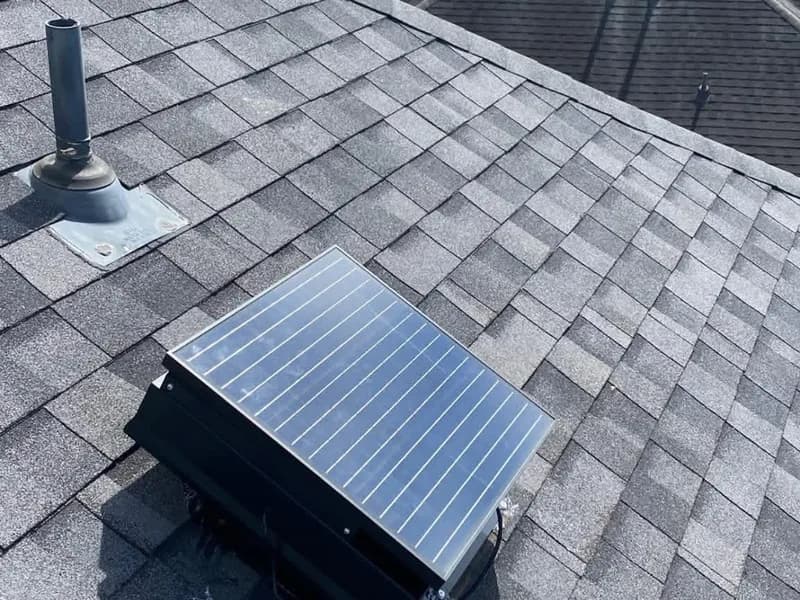
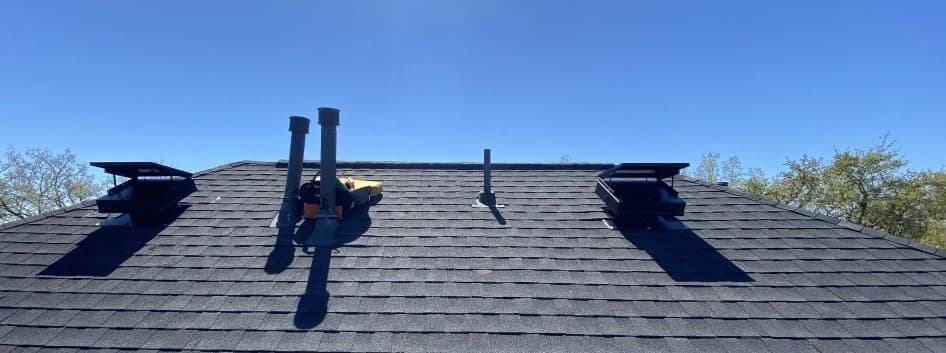
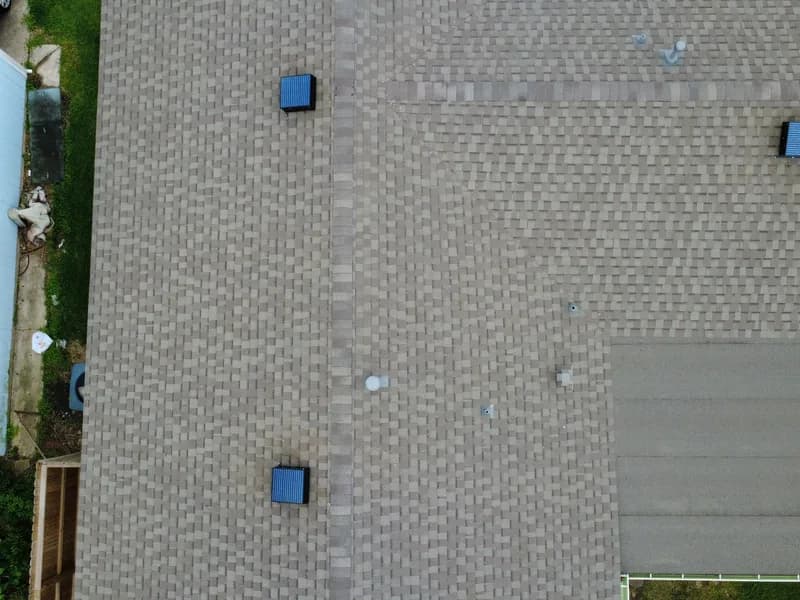
You get one solar attic fan, sized for a typical Missouri home, paired with an authorized installer who does the install. The unit is a 30W solar attic fan with the solar panel built into the housing. It mounts on the back slope of your roof so it does not show from the curb. The installer cuts a clean opening, seals it for wind-driven rain, runs a thermostat and a humidistat, and ties off the mounting hardware.
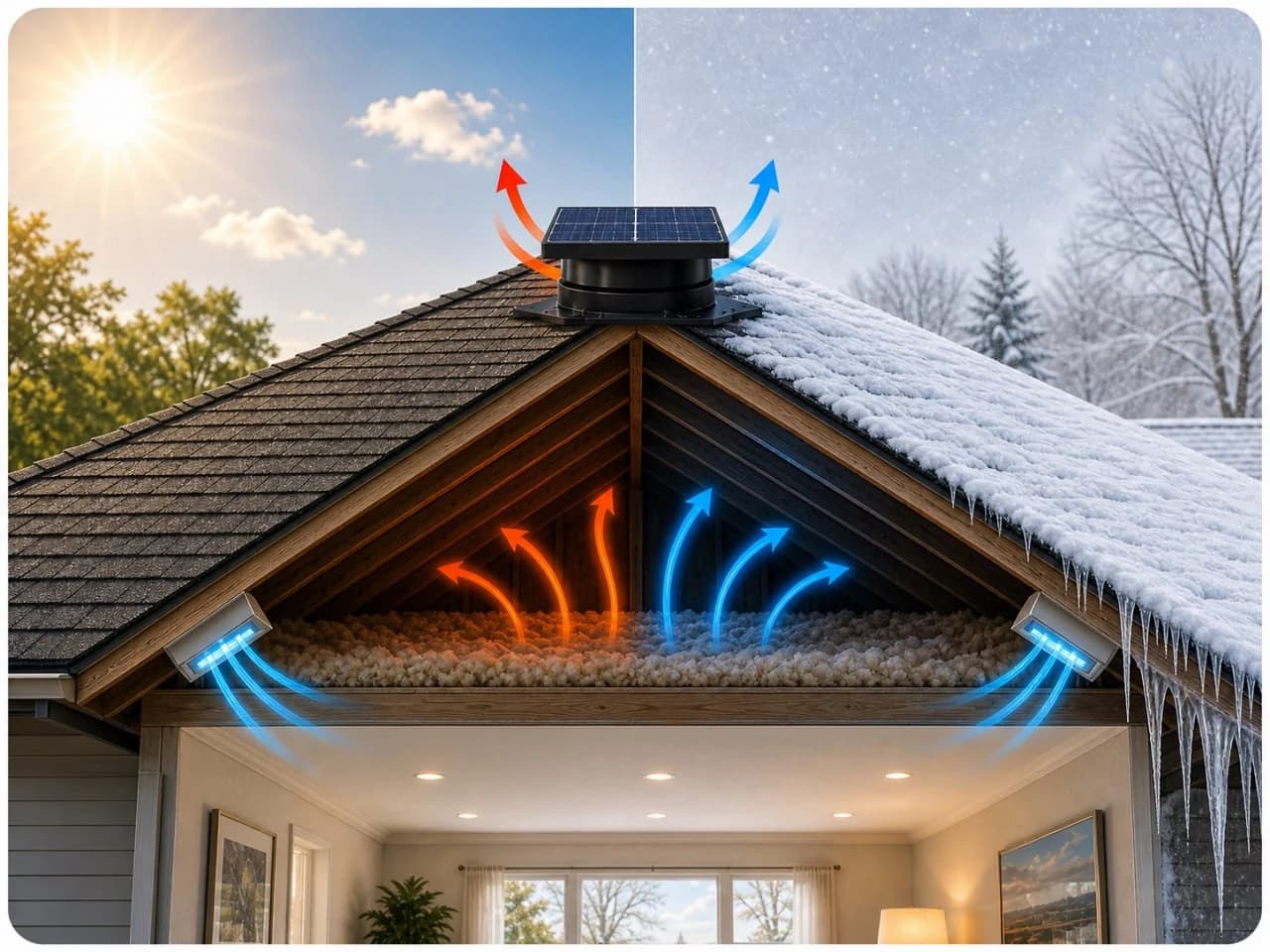
Professional install in a single visit. No electrician. No new circuit. No operating cost added to your bill. Sun hits the panel, the fan spins, and a lot of trapped attic air gets pushed out. When a thunderstorm rolls across the river valley, the fan rests. When the sun comes back, it goes right back to work.
What you'll save
The average Missouri home uses about 13,400 kWh per year, above the national average, because both summer cooling and winter heating pull from the same panel. A typical Missouri summer power bill sits near $225 in July or August, and a big share of that is your AC fighting a hot wet attic.
Owners who install a solar attic fan in Missouri usually see a 10 to 20 percent drop in summer cooling cost (per U.S. Department of Energy residential cooling-load guidance). On a $225 August bill, that is $22 to $45 back in your pocket that month. Missouri gets the humidistat benefit on top of the heat savings. The fan pulls moisture out of the attic, which means your AC stops working double-time to dehumidify the upstairs, and your roof deck stops rotting slowly from below. Across the four to five month cooling season the fan pays for itself well before its warranty runs out.
Real Missouri install scenarios
Brookside, Kansas City. A 1920s craftsman bungalow off Wornall, original soffit vents, dark architectural shingles after the last hail claim. The owner had her thermostat at 75°F but the upstairs master bedroom never got below 83°F after 4pm. Mississippi Valley humidity was sitting in the attic on top of the heat. We placed the fan on the rear slope, added a humidistat, and within a week the attic dropped from 138°F to 107°F. The musty smell in the upstairs hall closet was gone by the end of month one.
Tower Grove, St. Louis. A 1900s brick two-flat with a flat-pitched mansard roof and limited venting. The upstairs unit was unusable from June through September. The installer placed the solar fan high on the back slope where the pitch allowed, and the owner reported his July bill dropped from $267 to $208. The upstairs unit became sleepable past 10pm for the first time the owner could remember.
Battlefield, near Springfield. A 2000s two-story in one of the newer subdivisions, composite shingles, ridge vent that was not pulling enough air through the long attic run. The bonus room above the garage sat 6°F hotter than the rest of the house every afternoon. After install, attic temp pulled from 136°F down to 106°F, and the bonus room started tracking within 2°F of the main floor by August.
Installed by Missouri authorized installers
Missouri installers deal with all four seasons at full strength: heat and humidity in summer, ice storms in winter, and tornado-driven hail and wind in the shoulder months. Our installers use wind-rated mounting hardware everywhere it applies and pay attention to the ice-and-water shield around the fan penetration. Older homes in the Central West End, the Hill, Brookside, and Westport often have original plank decking under the shingles, and the installer adjusts the cut and seal accordingly. Newer subdivisions outside Kansas City and St. Louis sometimes have HOA placement rules, and back-slope mounting clears almost all of them.
You pick a date, the installer shows up, and your attic stops cooking.