Why Idaho attics need this
Idaho summer heat catches people off guard. Boise sits at 2,730 feet, Idaho Falls at 4,705, Pocatello at 4,462. The Treasure Valley regularly hits 95°F to 100°F for stretches in July and August, and the high-desert air is dry as bone. Attic probes in Meridian and Nampa routinely read 134°F to 144°F by 4pm in midsummer. The sun cooks the shingles from sunup until almost 9pm, and with no humidity buffer to slow it down, the climb under the roof deck is fast and steep. The UV load at these elevations is heavier than what you would see at the same calendar moment in Atlanta or Houston.
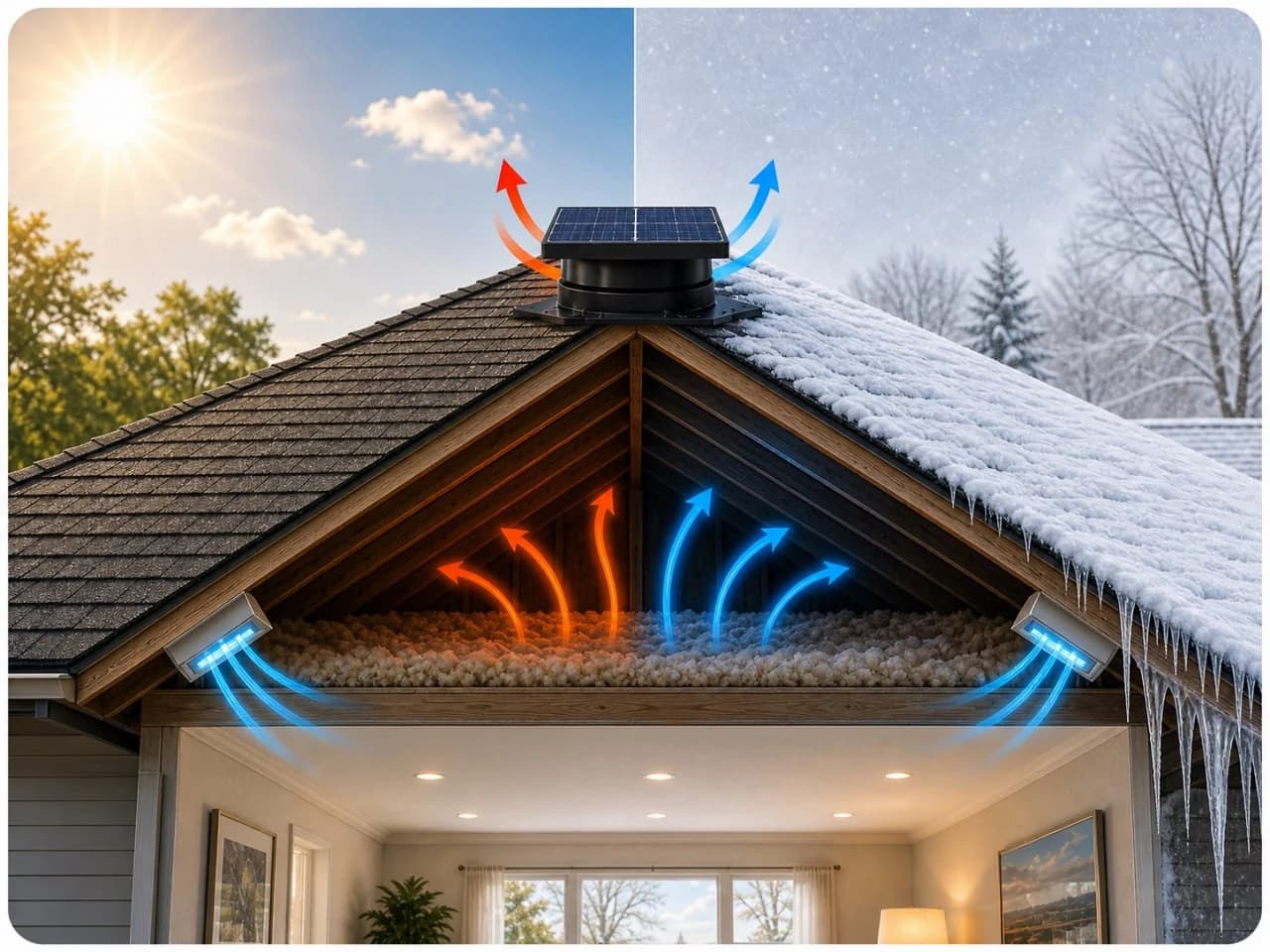
The other Idaho story is the daily swing. A July day in Boise starts at 60°F and climbs to 94°F. That 34°F swing happens every 24 hours, and the attic flexes through it. Asphalt shingles installed in Caldwell or Pocatello often need replacement at 14 to 17 years instead of 25, because they bake from underneath in summer and freeze through long mountain winters. Wildfire smoke from late July through September coats the roof in ash and forces windows shut, which makes a hot upstairs even worse. Snow load on Coeur d'Alene and Sandpoint roofs from November through March pushes moisture into vents that were never built to handle it. Moving the air out is the same fix in every season.
What we install
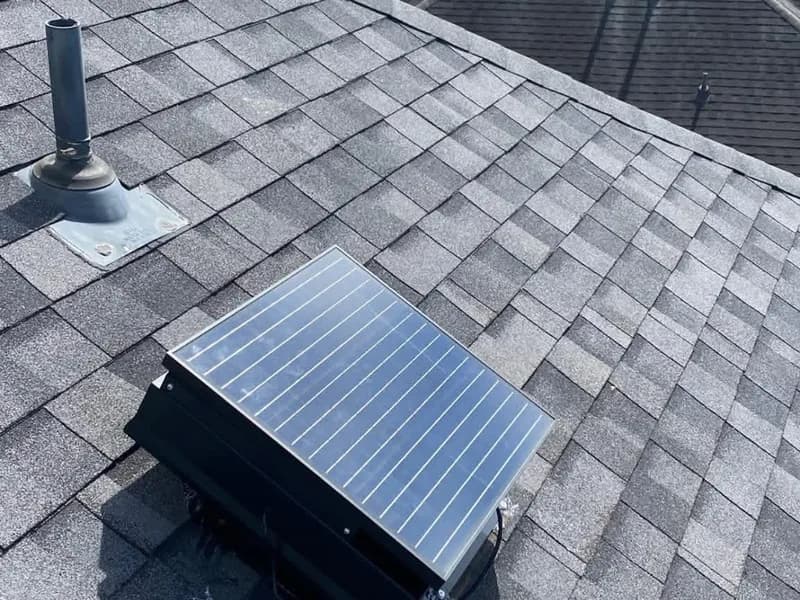
You get one 30W solar attic fan, sized for an Idaho home, paired with an authorized installer who handles the install. The solar panel is built into the housing. The unit is UV-stabilized, which matters in dry high-desert sun where cheap plastic vents crack inside three or four summers.
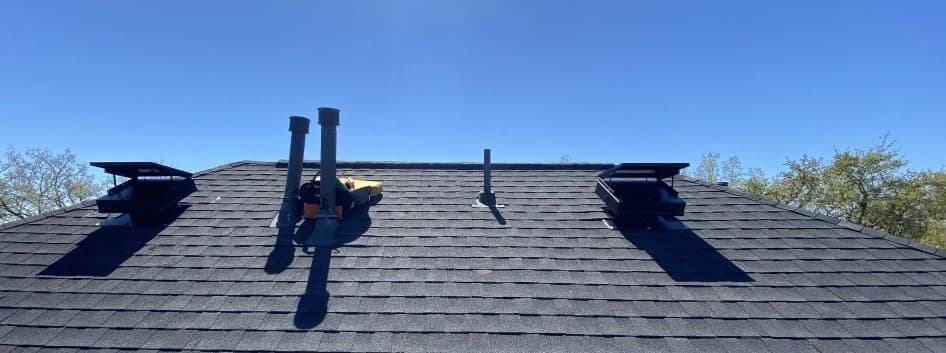
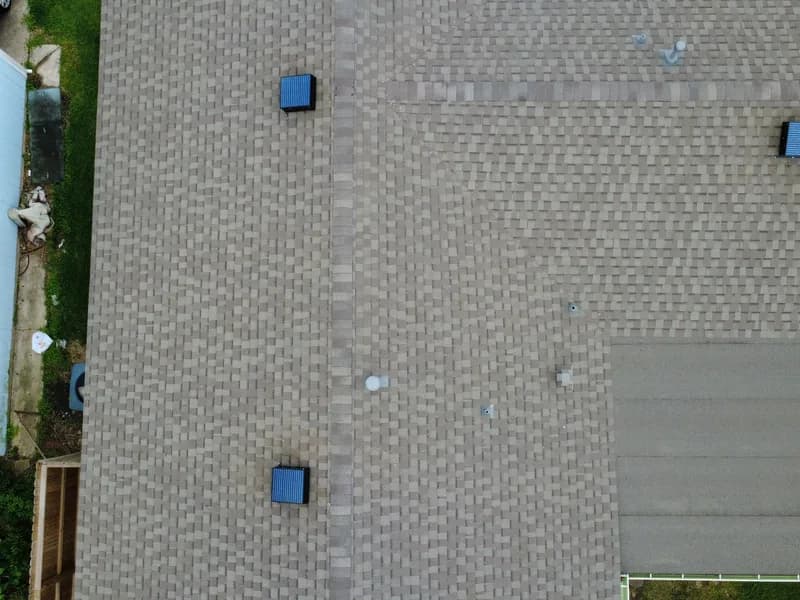
The installer mounts the unit on the back slope so it stays hidden from the street, cuts a clean opening, seals it for Idaho wind-driven snow and wildfire ash, runs a thermostat and a humidistat, and ties off the flashing. Professional install in a single visit. No electrician. No new circuit. Sun hits the panel, the fan spins, hot attic air moves out.
What you'll save
The average Idaho home uses about 9,200 kWh per year. A typical summer power bill sits near $145 in July or August. Cooling load runs roughly June through early September, and in the Treasure Valley those weeks are real.
Owners who put a solar attic fan on an Idaho home usually see a 12 to 22 percent drop in summer cooling cost (per U.S. Department of Energy residential cooling-load guidance). On a $145 August bill, that is $17 to $32 back. The longer-game payoff in Idaho is the roof. Asphalt shingles often need replacement at 14 to 17 years because they cook from below in summer and freeze through January. Cool the attic dramatically and you buy years back before the next reroof. The same fan also pulls damp warm air out in spring and fall, which is the difference between dry sheathing and rotten sheathing under deep snow.
Real Idaho install scenarios
Boise, North End. A 1910s craftsman bungalow on Harrison Boulevard with original wood trim, a steep roof, dark architectural shingles installed in 2013, and afternoon sun pouring down off the Boise Front. The owner kept her thermostat at 75°F but the upstairs front bedroom hit 84°F by 5pm in late July. We pulled an attic probe reading of 140°F on a 96°F afternoon. The installer set the fan on the back slope so the North End historic streetscape stayed clean. Two weeks later the probe was reading 112°F at the same hour and the bedroom tracked the rest of the house within 2°F by sundown.
Meridian, near The Village. A 2000s two-story master-planned home with dark composite shingles, an HOA that does not allow visible roof equipment from the street, and an attic that read 138°F on the install crew's probe in early August. We placed the fan on the rear-facing slope above the garage well below the ridge line so it stays invisible from the curb. The owner reported his August bill dropped from $172 to $128 and the upstairs game room dropped from 84°F at 7pm to 77°F at 7pm. The AC stopped running through the night for the first time that summer.
Coeur d'Alene, lake shore. A 1980s cedar-sided home perched above the lake with a steep roof, dark composite shingles installed about 10 years ago, and brutal afternoon western sun coming off the water. The attic was reading 136°F on the install crew's probe in late July, and the owner had already replaced a turbine vent that cracked from UV. We mounted the solar fan high on the back slope below the ridge so it catches the longest solar window. The owner texted us a week later: the upstairs bedroom dropped from 82°F at 7pm to 75°F at 7pm and the AC stopped cycling past 9pm for the first time that season.
Installed by Idaho authorized installers
Idaho building stock is a mix of 1910s craftsman bungalows in Boise's North End, postwar ranches in Nampa and Idaho Falls, cedar-sided 1980s splits around Coeur d'Alene and Sandpoint, and newer master-planned builds across Meridian, Eagle, and Star. Many of those master-planned HOAs have strict roofing rules about visible equipment. Our installers default to back-slope placement, which clears almost every HOA rule we have seen in the Treasure Valley. Older historic districts in Boise and Pocatello have preservation overlays that work the same way. You pick a date, the installer shows up, and your attic stops cooking.