Why New York attics need this
People assume New York attics only have a winter problem. Summer is the part that runs your AC bill up. The state's average July high is around 83°F, but the attic does not care about the outdoor number. Under dark asphalt shingles in full afternoon sun, the deck routinely hits 128°F to 132°F. We have pulled probe readings of 132°F in Brooklyn brownstones, Long Island colonials, and Hudson Valley capes when the outside air was only 86°F. That heat radiates straight down through the ceiling drywall into the bedrooms below, all evening long. The top floor of a Park Slope rowhouse or a Westchester two-story sits 10°F to 15°F hotter than the first floor from late June through August. Your AC fights it. Your power bill, especially on ConEd rates, pays for the fight.
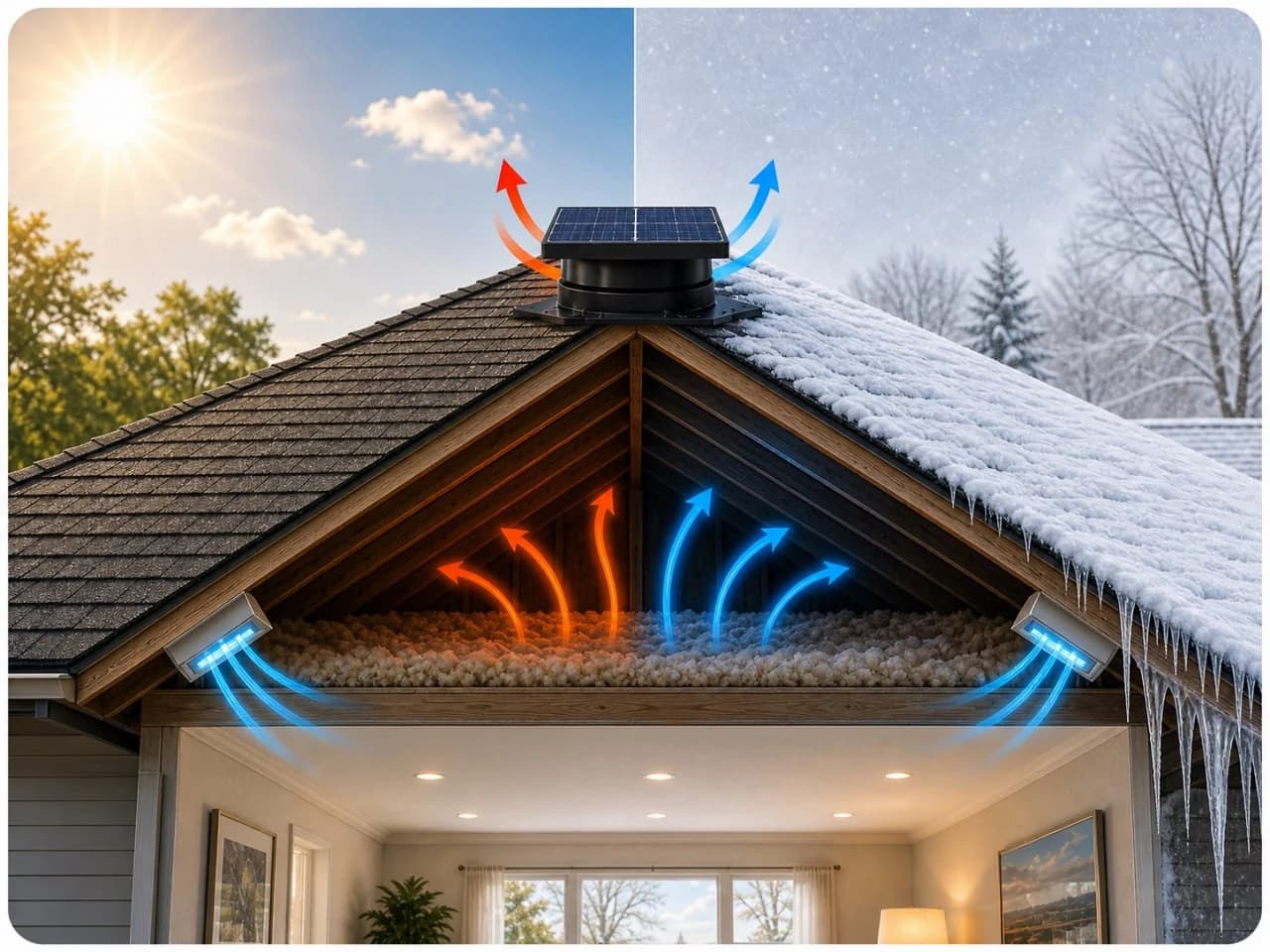
The winter side is the second pitch, and in New York it is a big one. When indoor heat leaks up into the attic, the deck warms, snow on the shingles melts from below, runs to the freezing eaves, and refreezes into a ridge of ice. The next melt backs up under the shingles and pushes into your living-room ceiling. At the same time, moist air from showers, cooking, and breathing rises into the attic and freezes on the deck. When it thaws, it drips onto the insulation. Every winter this sends thousands of New York homeowners to their insurance carrier with ceiling stains, soaked drywall, and ruined plaster.
A solar attic fan does both jobs on one piece of equipment. In July it moves the trapped 132°F air out and cools the deck dramatically. In February the panel is making power the moment the sun is up, and the fan is pulling moist air out before it freezes on the deck. Sun runs it year-round. No operating cost added to your bill.
What we install
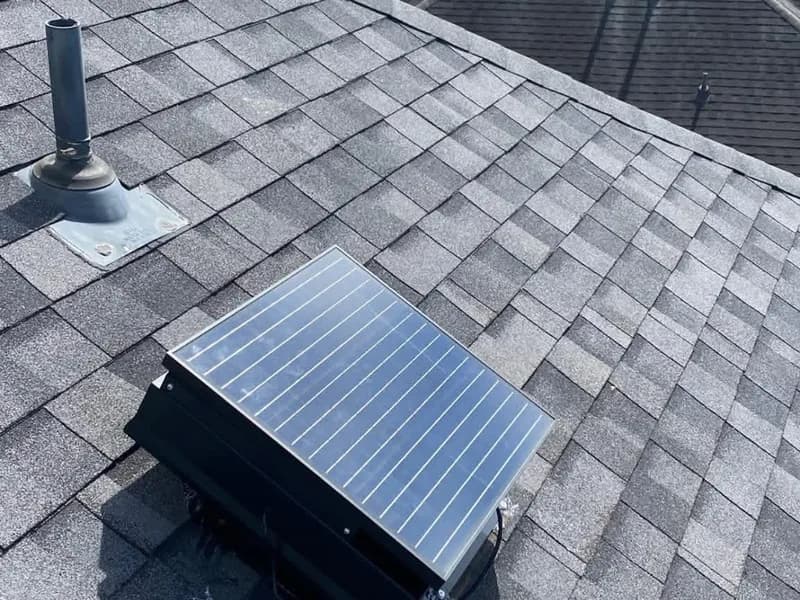
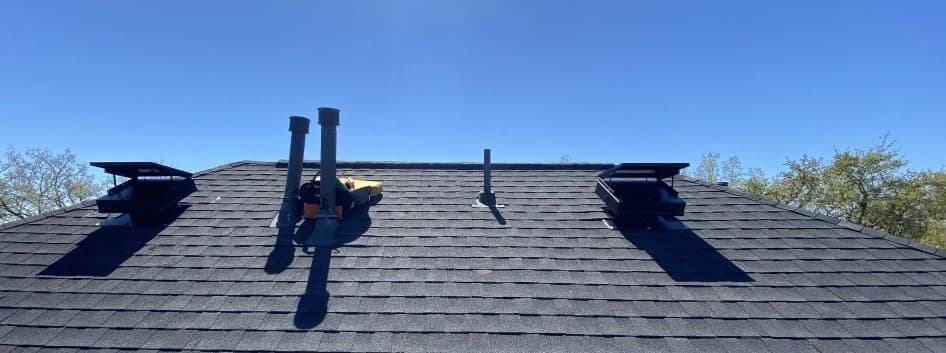
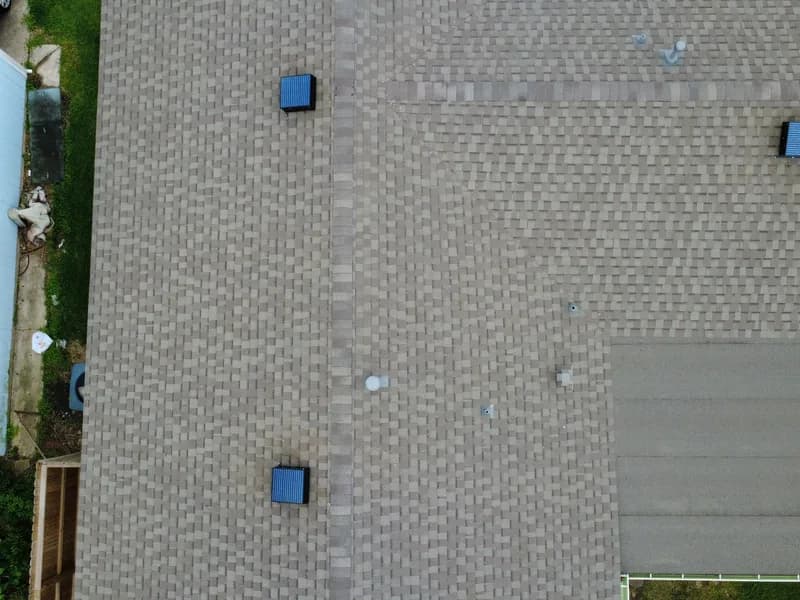
You get one solar attic fan paired with an authorized installer who does the install. The unit is a 30W solar fan with the panel built right into the housing. It mounts on the back slope of your roof so it stays off the street view, which matters in landmarked blocks and historic districts. The installer cuts a clean opening, flashes it for Nor'easter wind-driven rain, runs both a thermostat and a humidistat, and ties it all off.
Professional install in a single visit. No electrician. No new circuit. No operating cost added to your bill. The sun does the work.
What you'll save
Summer cooling is the first dollar win, and on ConEd or National Grid rates the numbers move. The average New York home uses around 7,100 kWh per year and a typical New York summer power bill sits near $165 in July. A solar fan trims 8 to 15 percent off summer cooling cost (per U.S. Department of Energy residential cooling-load guidance), which is $13 to $25 a month back from June through August. The bigger summer payoff is comfort: the upstairs bedrooms become sleepable again because the ceiling stops radiating attic heat down into the room.
The other wins stack on top. Shingle life on a deck that is not cooking at 132°F all summer and refreezing all winter extends five to ten years. New York ice-dam claims average $4,000 to $10,000. Mold remediation when wet insulation goes too long runs $3,000 to $8,000. And because your insulation stays dry, your heating bill comes down too.
Real New York install scenarios
Park Slope, Brooklyn. A 1910 brownstone-row house with a flat-and-pitched hybrid roof and original wood deck. The owner kept getting brown stains on the top-floor bedroom ceiling every March and could not figure out why until an installer pointed at the ice ridge along the front cornice. We mounted the solar fan on the back slope above the rear extension where it would not show from the street. After the first full winter, no stains, and her insulation guy said the cellulose felt dry for the first time in years.
Saratoga Springs, upstate. A 1920s clapboard four-square on a tree-lined street near the racetrack. The attic had a soft musty smell year-round and the home inspector had flagged condensation on the rafters. Snowpack on this house regularly sits eighteen inches deep. Install went on the rear north slope. By the next visit in February, the underside of the deck was dry to the touch and the homeowner had stopped running a dehumidifier in the upstairs hall.
Riverdale, the Bronx. A 1950s Cape Cod with a finished half-story upstairs and a tight knee-wall attic that has caused trouble since the owners bought it. Ice dams formed every winter at the dormer junctions. Summer made the upstairs bedroom unusable above 85°F. The solar fan went on the back slope behind the dormer line. Both problems eased in the first season, and the owners reported their July electric bill dropped from $190 to $148.
Installed by New York authorized installers
New York has some of the oldest housing stock in the country. A lot of homes still have 1920s framing under modern shingles. Original soffit venting is often painted shut, blocked by insulation, or never adequate to begin with. Slate roofs converted to asphalt in the 1960s and 70s rarely got their ventilation upgraded along with the shingles. Our installers know how to add the intake side when the soffits are not pulling their weight.
NYC landmark districts, Westchester historic neighborhoods, and many co-op boards have placement rules. Back-slope mounting clears almost every rule we have run into. You pick a date, the installer shows up, and your attic stops sweating.