Why Iowa attics need this
Des Moines averages 86°F in July, with stretches of 95°F-plus days every summer. That outside number is bad enough. The number above your ceiling is worse. Iowa attics routinely run 130°F to 140°F under dark asphalt shingles in mid-July, and the corn-belt humidity that makes the outside air feel heavy makes the attic air a sauna. That heat drives down through the ceiling drywall into the bedrooms and the living room. Your central AC fights it from 2pm until midnight. Your July electric bill quietly sits at $145 or more, and that is on the average Iowa home, not a big one.
Then November flips the script. Iowa winters dump heavy wet snow and the attic holds it for weeks. Warm moist air from showers, cooking, and the people inside the house rises through every can light and attic hatch into the cold attic space, hits the cold deck, and condenses. That condensation soaks blown-in insulation flat, rots sheathing, and freezes at the eaves where it builds ice dams. The repair bill from one bad ice-dam leak runs $3,000 to $6,000 around Cedar Rapids and Des Moines.
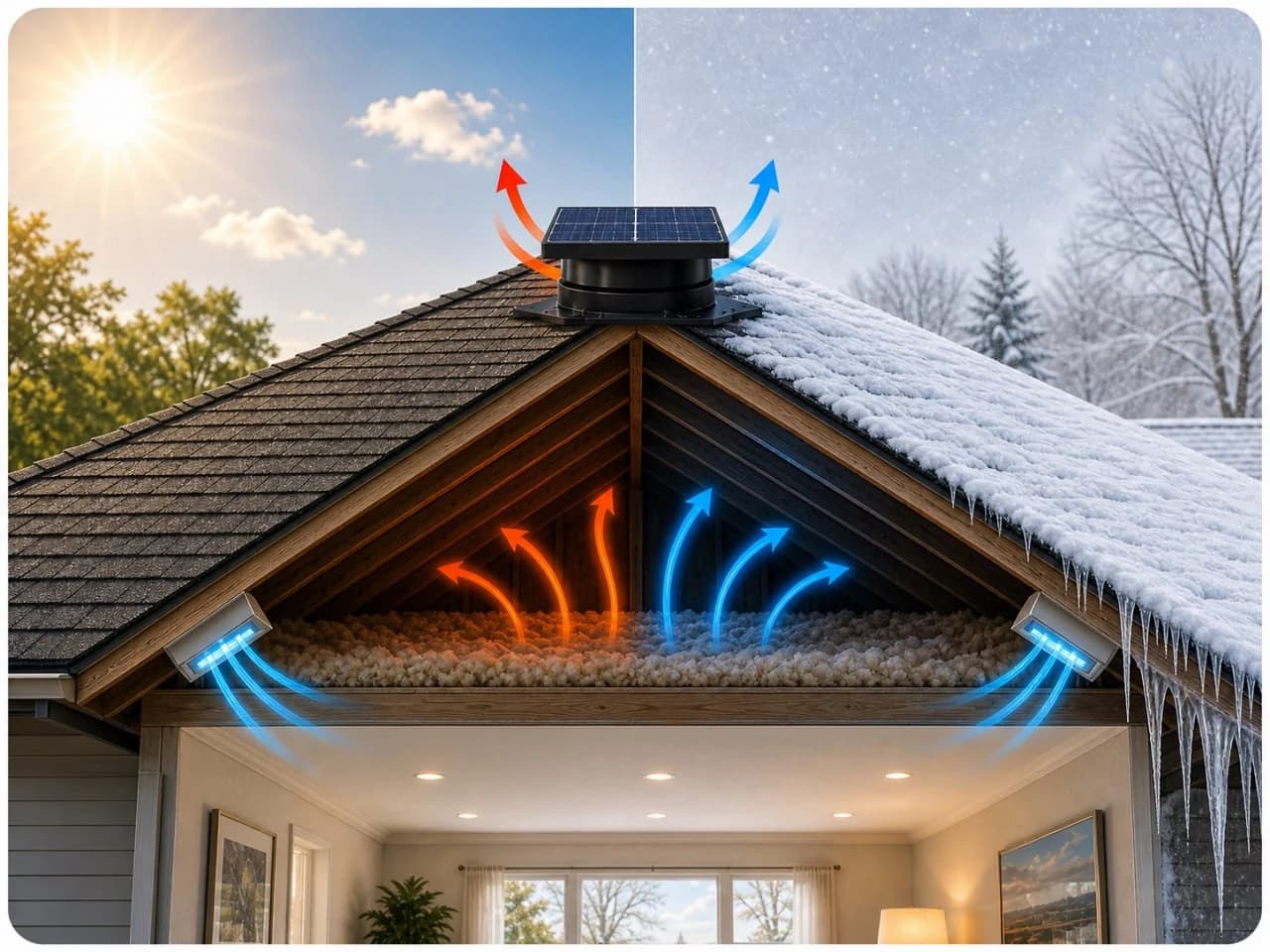
A solar attic fan turns over the trapped air whenever the sun is up. In July it dumps the cooking summer heat. On a bright January afternoon it pulls humid house-air out before it can freeze on the deck. Same fan, both seasons, no operating cost added to your utility bill.
What we install
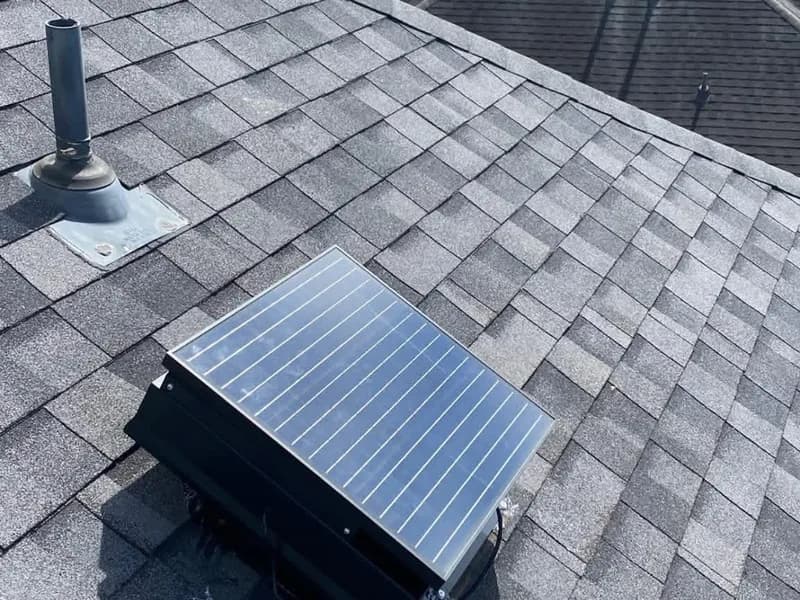
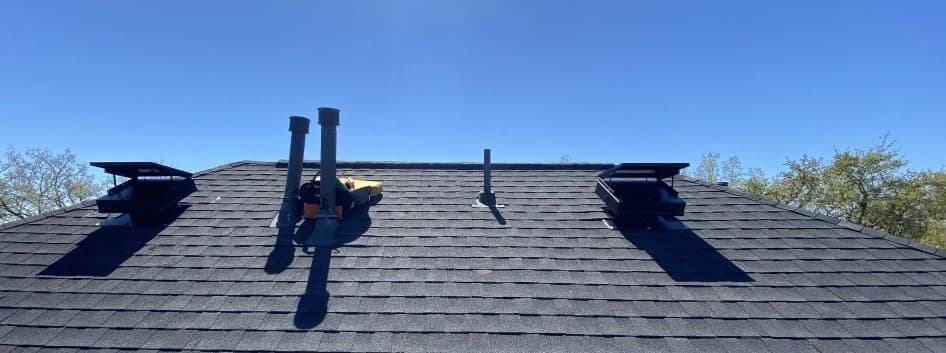
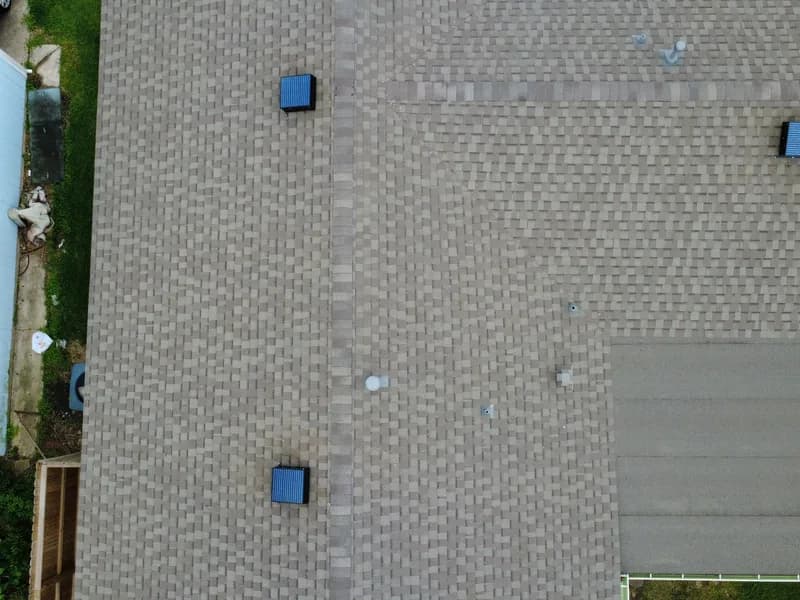
A 30W solar attic fan with the panel built into the housing, set on the back slope so it is hidden from the curb. The installer cuts the opening, flashes it for Iowa winter ice and summer downpours, runs a thermostat and humidistat in the attic, and is back down the ladder in a single visit. No new circuit, no electrician, no new utility line item.
What you'll save
The average Iowa home uses about 10,100 kWh per year, higher than most of the Midwest because of long, hot, humid summers and cold electric-heavy winters. Summer bills land around $145. Cooling-load savings from attic ventilation in Iowa run 10 to 18 percent, which is $15 to $26 a month from June through September.
The math gets serious when you add the rest of the year. An ice-dam leak costs $3,000 to $6,000 to repair. Wet, flattened insulation makes your furnace run longer all winter. Cooler shingles in summer means a 25-year roof lasts closer to 25 years instead of failing at 18. Iowa also sits in tornado alley, which means more hail and storm damage on roofs that are already stressed from heat-cooking from below. Keeping the deck cooler and drier extends every line in that roof-replacement budget.
Real Iowa install scenarios
Sherman Hill in Des Moines. An 1885 brick Victorian with a complicated roof and decorative gable vents that were beautiful and almost completely blocked. Upstairs bedrooms hit the high 80s in July despite a new central AC. The installer cleared two soffit runs, added the solar fan on the back slope facing south-southwest, and the next week the upstairs held at the thermostat setting after 4pm for the first time the owner could remember.
Czech Village in Cedar Rapids. A 1930 bungalow with a small finished attic room and a kneewall storage space. The 2008 flood had hit the house and the rebuilt insulation was still trapping moisture in the attic above. Owner saw black streaks of mold on the underside of the deck. We added the solar fan with a humidistat. By the end of the first sunny stretch the deck was dry. The mold remediation quote that had been sitting on the kitchen table got thrown out.
Iowa City east side. A 1995 split-level near the university with composite shingles and a ridge vent that was never going to be enough for the run of the roof. Owner had ice dams over the garage in two of the last three winters. We placed the fan on the back slope above the garage and ran the humidistat. The next winter, even with 30 inches of snow, no dam formed. The owner sent us a thank-you email in March with a photo of the clean drip edge.
Installed by Iowa authorized installers
Iowa housing runs from 1880s Victorians in the river towns to 1960s ranches in the inner-ring suburbs to 1990s split-levels in West Des Moines and North Liberty. Different framing, different attic geometry, same physics. Our local installers know how to size the fan and find the right spot on the back slope. The unit stays out of sight from the street, which clears every HOA rule we have run into in Ankeny, Urbandale, and North Liberty.
You pick a date, the installer shows up, and your attic stops cooking in July and stops sweating in January.