Why Georgia attics need this
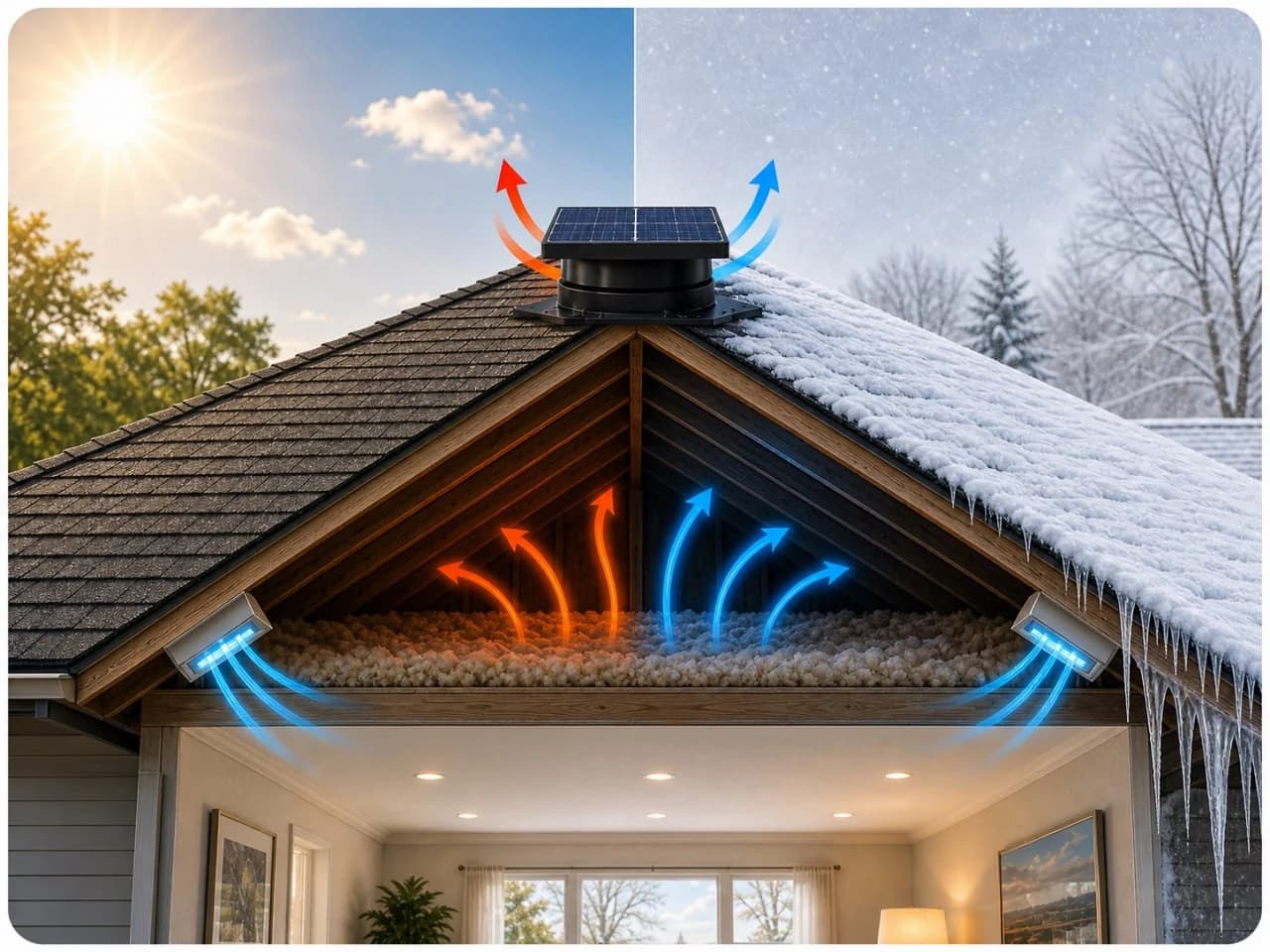
Georgia summers do not quit. The hot stretch starts in early May and grinds on past the first week of October, and the worst part is not the 90°F outdoor high. It is the dew point sitting in the low 70s for weeks at a time. That wet southern air gets pulled into your attic through the soffits and then sits there, baking against the underside of the shingles. Probes in Sandy Springs and East Cobb attics routinely show 135°F to 140°F by 4pm in July and August.
Mid-summer dew points climb into the 70s and that humid attic air condenses on the cold side of your AC ducts, feeding mildew on the joists. Insulation slows that load. It does not move it.
What we install
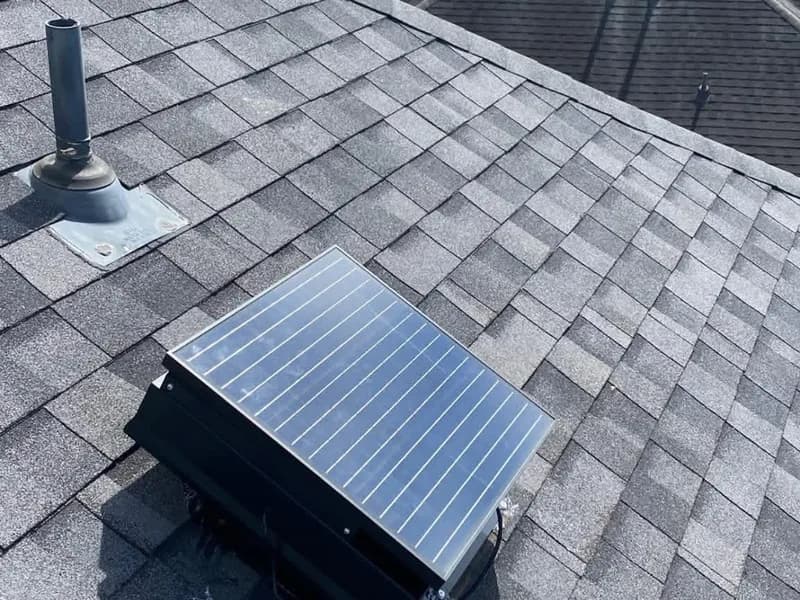
You get one 30W solar attic fan, sized for a Georgia home, paired with an authorized installer who handles the install. The solar panel is built into the housing. The fan motor is sealed against the humid air it lives in, because a Georgia attic in August is closer to a sauna than a Texas attic on the same day, and cheap motors corrode fast in that environment.
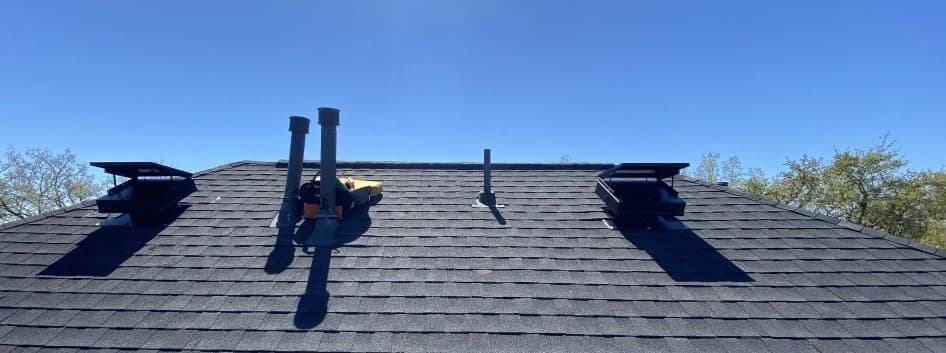
The installer mounts the unit on the back slope of your roof, picks a placement that clears the Atlanta tree canopy where it can, cuts a clean opening, seals it for the kind of wind-driven thunderstorm rain that rolls across the metro most summer afternoons, and runs a thermostat plus a humidistat so the fan responds to both heat and moisture. Professional install in a single visit. No electrician, no new circuit, no operating cost added to your bill. Sun hits the panel, the fan spins, and a lot of trapped attic air moves out.
What you'll save
The average Georgia home uses about 13,800 kWh per year, with most of that load stacked between May and October. A typical Georgia summer power bill sits near $220 in July or August, and a real chunk of it is your AC fighting the wet heat coming down from the attic.
Owners who install a solar attic fan in Georgia usually see a 15 to 25 percent drop in summer cooling cost (per U.S. Department of Energy residential cooling-load guidance). On a $220 August bill, that is $33 to $55 back in your pocket that month. Georgia's cooling season runs roughly May through early October, so you stack five solid months of savings. The longer-game payoff matters too. Asphalt shingles in metro Atlanta usually go 12 to 15 years before they start curling, mostly because they cook from underneath. Cool the attic dramatically and the humidistat keeps moisture moving, and you push that replacement out by real years.
Real Georgia install scenarios
Atlanta, Brookhaven neighborhood. A 1960s split-level with original soffit vents, dark architectural shingles, and a mature oak canopy that shaded the front slope but left the back roof in full afternoon sun. The owner kept her thermostat at 75°F but the upstairs bonus room sat at 84°F by 5pm and her July bill had climbed to $268. The installer set the fan on the back slope where the sun window was longest, and added a humidistat. Attic probe dropped from 138°F to 110°F by week two, and the bonus room tracked the rest of the house within 2°F by sundown.
Marietta, East Cobb. A two-story brick traditional with composite shingles and a 12-year-old roof. Classic Cobb County build. The owner's complaint was not the day, it was the night, the upstairs bedrooms were still at 80°F at midnight even with the AC running hard. Attic was holding humid heat well past sunset because the dew point that week was 73°F. We placed the fan on the rear slope above the garage and the humidistat kept it running into the early evening on the worst nights. His August bill dropped from $251 to $187, and the master bedroom finally hit the thermostat setpoint before 10pm.
Savannah, Ardsley Park. A 1920s bungalow under heavy live oak shade, Lowcountry salt-air rolling in off the marsh, and a back addition over the kitchen that turned into an oven by noon. Attic probe read 132°F on a 91°F July day, lower than Atlanta but the humidity load was worse. We used corrosion-resistant aluminum mounting hardware for the coastal air, placed the fan on the back addition's rear slope where it caught a real midday sun gap in the canopy, and the humidistat carried most of the work. The owner reported the kitchen ceiling stopped feeling damp by week one and her August bill came in $41 lower than the year before.
Installed by Georgia authorized installers
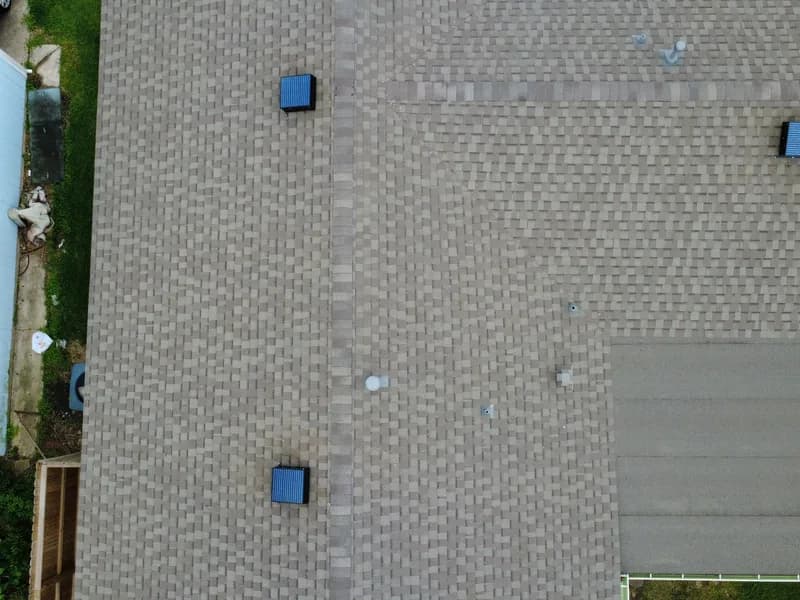
Newer HOA communities in north Fulton and East Cobb have placement rules so the unit cannot be seen from the front of the home. Our installers default to back-slope placement, which clears almost every HOA rule we have seen. You pick a date, the installer shows up, and your attic stops cooking.